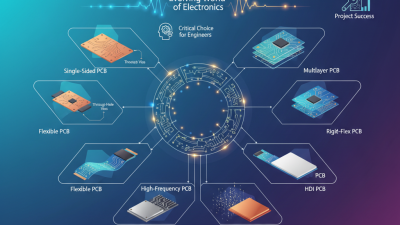
Choosing China’s best prototype PCB manufacturing partner requires more than comparing prices. A reliable supplier must turn clean design files into a tested, buildable board. It should also explain limitations before production begins. Important details include layer count, copper weight, surface finish, controlled impedance, and component availability. A strong factory will review Gerber files, drill data, and the bill of materials carefully. Its engineers should identify narrow traces, weak solder joints, and difficult assembly areas. These checks reduce expensive revisions later.
Mike Buetow, a veteran PCB industry analyst and president of PCEA, captures the practical mindset well: “A prototype is a learning tool, not a production shortcut.” That principle matters in prototype PCB manufacturing. The first board should expose risk, not hide it. Ask suppliers for inspection records, electrical test methods, material certificates, and realistic delivery times. Certifications can help, but they do not replace communication or process control. Request photographs of actual boards, not only polished website images. Look for clean vias, consistent solder masks, sharp silkscreen marks, and properly finished edges. Small details reveal manufacturing discipline.
No supplier is perfect. Some quotations appear attractive until tooling, testing, or shipping charges appear. Others promise speed but provide limited engineering feedback. I have also seen designs pass visual inspection while failing functional testing. That is why a dependable partner should support design-for-manufacturing reviews, prototype assembly, testing, and controlled revisions. China offers many capable PCB manufacturers, but the best choice depends on technical fit, traceability, responsiveness, and honest problem-solving. A lower price alone is not proof of value.

China’s best prototype PCB manufacturing services are defined by engineering control, not only low pricing. WSTS projected global semiconductor sales at 611.2 billion dollars in 2024. That growth increases pressure on prototype teams to shorten development cycles without hiding technical risks.
A capable manufacturer reviews Gerber files, stackups, impedance targets, and drill tolerances before production. Engineers should discuss solder mask clearance, copper balance, and component availability with the customer. A first article should include electrical testing, AOI records, and clear revision traceability. IPC-6012 and IPC-A-600 practices provide useful benchmarks for rigid boards. However, certificates alone do not prove daily process discipline. A factory may pass an audit and still communicate poorly during an urgent design change. That weakness deserves attention.
Tips: Request a DFM report before ordering. Ask for controlled-impedance coupons when high-speed signals matter. Confirm whether the quoted lead time includes testing and rework. Review cross-section images from similar builds, but treat them as supporting evidence, not proof. The best service explains trade-offs in plain language. It also admits uncertainty.
IPC’s electronics industry workforce research continues to identify skills shortages as a manufacturing concern. Therefore, experienced process engineers can be as valuable as advanced equipment. Prototype quality depends on inspection, documentation, and feedback from the production floor. Price matters, but an inexpensive board that delays testing is not inexpensive.

China Best Prototype PCB Manufacturing Services?
How to Evaluate Prototype PCB Manufacturers in China
Choosing a prototype PCB manufacturer requires more than comparing prices. Review engineering capability, process control, and communication speed. The ISO Survey 2022 recorded 428,679 ISO 9001 certificates in China. Certification helps, but it does not prove excellent prototype work. Ask for recent audit records, process-control examples, and traceability details. A reliable factory should explain impedance control, layer registration, surface finish, and solder-mask tolerances clearly. Vague answers deserve caution.
Request a sample build before placing a larger order. Check drill accuracy, copper thickness, edge quality, and solderability under magnification. IPC standards provide useful acceptance references for these checks. The 2023 World Bank Logistics Performance Index gave China a 3.7 overall score, ranking it 19th globally. Delivery remains important, especially for engineering teams facing repeated design changes. Confirm lead times for fabrication, testing, shipping, and remake handling. Do not trust one impressive quotation.
Tips: Send identical Gerber files to three manufacturers. Compare engineering questions, not only prices. Ask whether electrical testing covers every board. Clarify hidden charges for tooling, urgent production, and failed inspection. A cheaper board may create expensive debugging work. I would also review one weakness openly: many evaluations overvalue certificates and ignore response quality. Fast, precise communication often reveals manufacturing discipline earlier than a polished factory tour.
A practical evaluation framework for comparing prototype PCB suppliers by engineering capability, manufacturing quality, delivery performance, compliance, and total cost.
| Evaluation Dimension | What to Verify | Practical Benchmark for Prototype PCB Projects | Evidence to Request | Suggested Weight | Warning Signs |
|---|---|---|---|---|---|
| Engineering and DFM Support | Review of Gerber files, drill files, stack-up, impedance requirements, and manufacturability risks before production. | A qualified supplier should identify issues such as insufficient spacing, annular-ring problems, copper balance, solder-mask limitations, or unmanufacturable drill sizes before fabrication. | Sample DFM report, engineering communication record, stack-up proposal, and clarification workflow. | 15% | Orders are accepted without technical review, or engineering questions are answered only after production has started. |
| Supported PCB Technologies | Ability to manufacture the board structure and materials required by the design. | Confirm capability for the required layer count, board thickness, copper weight, surface finish, via structure, controlled impedance, rigid-flex or flex construction, and special materials. | Capability matrix, material specifications, sample cross-sections, and technology-specific process limits. | 14% | Technology limits are described vaguely, material substitutions are made without approval, or advanced features are outsourced without disclosure. |
| Quality Management System | Whether production and inspection processes are controlled through a documented quality system. | Look for a documented quality system, controlled work instructions, traceability, nonconformance handling, and corrective-action procedures. | Current quality certificates, inspection procedures, process-control records, and corrective-action examples with sensitive information removed. | 13% | Expired certificates, incomplete documentation, inconsistent answers, or no formal process for handling defects. |
| Inspection and Test Coverage | Inspection methods used to verify fabrication quality before shipment. | Depending on design risk, evaluation may include automated optical inspection, electrical testing, dimensional inspection, solder-mask inspection, microsection analysis, and impedance testing. | Inspection plan, sample test report, electrical-test method, acceptance criteria, and final inspection checklist. | 12% | Only visual inspection is offered for complex boards, test coverage is unclear, or inspection records cannot be provided. |
| Prototype Lead Time | Realistic production time from approved files and payment to shipment. | Compare standard and expedited options separately. Lead time should clearly state whether engineering review, fabrication, testing, weekends, and shipping are included. | Written quotation, production schedule, order milestones, and records of recent comparable projects. | 12% | The shortest advertised lead time is presented without conditions, or delays caused by engineering questions are excluded from responsibility. |
| Delivery Reliability | Consistency of meeting confirmed shipment dates rather than only offering a fast quotation. | Assess on-time delivery performance over multiple comparable orders; one successful prototype order is not enough to establish reliability. | Aggregated on-time delivery data, escalation procedure, shipment records, and customer references where available. | 10% | No measurable delivery data, frequent unannounced schedule changes, or unclear responsibility for rework and delays. |
| Material Traceability | Ability to identify the materials and process lots used for each production order. | Material type, laminate specification, copper weight, surface finish, and production lot should be traceable to the order documentation. | Material certificates, lot records, certificates of conformance, and shipment documentation. | 8% | Material origin or specification changes cannot be documented, or certificates are supplied only after repeated requests. |
| Compliance and Environmental Controls | Compliance with applicable material, environmental, export, and product requirements. | Confirm requirements such as RoHS and REACH declarations when applicable, along with any project-specific compliance, conflict-minerals, or halogen requirements. | Current declarations, compliance statements, material declarations, and customer-specific documentation process. | 7% | Generic declarations do not match the ordered materials, documents are undated, or compliance requests are treated as optional. |
| Communication and Project Management | Clarity, responsiveness, technical English capability, and ownership of project issues. | The supplier should provide a single accountable contact, written revision control, clear approval points, and timely responses to technical questions. | Communication timeline, revision-control procedure, sample order-confirmation document, and escalation contacts. | 5% | Different departments provide conflicting information, revisions are not documented, or urgent problems have no escalation path. |
| Total Cost and Commercial Transparency | Full landed cost and the commercial conditions behind the quoted price. | Compare fabrication, tooling, testing, engineering, setup, packaging, shipping, taxes, rework, and possible expedite fees—not only the unit price. | Itemized quotation, payment terms, validity period, shipping options, rework policy, and cancellation conditions. | 4% | Important charges appear after order placement, the quotation has no validity period, or the lowest price excludes required tests or materials. |
Note: Benchmarks should be adjusted to the board technology, applicable standards, risk level, and delivery requirements of each project. A supplier should be selected using documented evidence rather than price alone.
The step-by-step PCB prototyping process starts with a clean design package. Export Gerber files, drill files, pick-and-place data, and a bill of materials. Confirm layer count, copper weight, board thickness, surface finish, and impedance requirements. A manufacturing engineer should review clearances before fabrication. This prevents expensive revisions later. Prismark’s 2024 market review estimates that global PCB sales reached nearly US$90 billion in 2023. Demand is rising, but quality still depends on process control.
Next, the factory performs design-for-manufacturing checks. It verifies trace width, via size, solder-mask openings, and component spacing. Bare boards are then laminated, drilled, plated, etched, and electrically tested. Assembly follows with solder paste printing, automated placement, reflow, and visual inspection. For prototypes, controlled reflow temperature matters. A small thermal mistake can create hidden solder defects. IPC quality guidance is widely used for acceptance criteria, although the correct class must match the product’s risk.
Tips: Send one validated data package. Mark critical dimensions clearly. Request cross-section images and test records. Keep spare components available. The first revision may fail. That is normal. An open engineering review is more valuable than blaming the supplier. Check lead times for unusual materials, because prototype schedules often break there. Recheck the bill of materials before approval. A missing polarity mark can delay an otherwise excellent board. According to the 2024 global electronics manufacturing outlook from IPC, supply-chain visibility and process consistency remain major priorities, making documented inspections essential.
China Best Prototype PCB Manufacturing Services?
Prototype PCB quality depends on measurable controls, not attractive photographs. IPC-6012 defines performance requirements for rigid boards, while IPC-A-600 guides visual acceptance. A capable manufacturer also uses IPC-TM-650 methods for solderability, microsection analysis, and electrical continuity. Impedance testing with a time-domain reflectometer can reveal a 50-ohm trace drifting beyond its target. Automated optical inspection catches surface defects, but it cannot verify every hidden via.
The Global E-waste Monitor 2024 reported 62 million tonnes of electronic waste worldwide in 2022, with only 22.3% formally collected and recycled. Durable prototypes matter. Thermal cycling, insulation-resistance checks, and plated-hole evaluation help prevent early field failures. IPC-A-610 acceptance criteria add discipline during assembly. Still, a perfect inspection record does not guarantee perfect reliability. Material variation, operator handling, and rushed approvals can remain overlooked.
Tips: Request a first-article report, cross-section photos, impedance results, and test records. Confirm laminate type, copper thickness, surface finish, and tolerance before production. Keep revision control visible on every file. A small design mistake can survive several checks. Review failed samples honestly, because an uncomfortable finding is more useful than polished paperwork. ISO 9001-based process control can support traceability, but it should never replace physical testing.
China-made prototype PCBs can offer low costs, short lead times, and flexible engineering support. The best service depends on quality control, not price alone.
For ten simple two-layer boards, fabrication may cost less than local production. A standard 1.6 mm board with HASL finish is usually economical. Four-layer boards, controlled impedance, and fine-pitch parts increase costs quickly. Tooling, testing, assembly, and shipping also affect the final invoice. A low quotation can become expensive after delivery fees. My first estimate was too optimistic.
Basic prototypes may ship within three to seven working days after file approval. Complex boards often need more time. Customs and transport can add several days. Prototype services suit sensor modules, industrial controllers, communication devices, and early consumer electronics. They also help teams test enclosure fit and connector placement before mass production. I request Gerber files, drill data, stack-up details, and clear inspection standards. One missing note can cause rework. I once overlooked a board-edge clearance, and the prototype exposed that mistake. That feedback was valuable, but avoidable. Impedance reports, electrical tests, and photographs of finished boards improve reliability. Ask about material certificates and inspection records before production.