How to Choose the Best PCB Manufacturing Process for Your Project?
In the ever-evolving world of PCB manufacturing, choosing the right process is crucial for success. Dr. Emily Chen, a leading expert in PCB technology, emphasizes, "The right manufacturing process can make or break a project." This statement resonates deeply in an industry where precision and efficiency are paramount.
When embarking on a PCB project, understanding the various manufacturing processes is essential. Each process has its own strengths and limitations. Factors like design complexity, material choice, and production volume can significantly influence the ideal choice. Yet, many engineers overlook these aspects, leading to costly revisions later on.
Mistakes can arise from rushing decisions or relying solely on past experiences. It is vital to explore options and reflect on each project's unique requirements. The right decision can enhance performance and reduce costs. In a competitive market, knowledge and adaptability are key in the PCB manufacturing landscape. Making informed choices can set a project apart from the rest.

Understanding the Basics of PCB Manufacturing Processes
Understanding the basics of PCB manufacturing is essential for any electronics project. The Printed Circuit Board (PCB) serves as the backbone of electronic devices. It provides the necessary support and connects various components. In recent years, the global PCB market reached approximately $70 billion, reflecting the increasing demand for electronic goods.
There are several manufacturing processes for PCBs, including additive and subtractive methods. Each has its pros and cons. For example, subtractive processes typically utilize copper laminates. This method removes excess material to create the final design. However, it can be wasteful and less eco-friendly. On the other hand, additive methods build the PCB layer by layer. This technique minimizes material waste and allows for intricate designs. Yet, it may require more specialized equipment.
Cost and production time also factor into the choice of manufacturing method. Reports indicate that the average cost for a standard PCB can range from $2 to $20 per square inch. Depending on complexity, the production time may vary widely. Simple designs may take just a few days, while complex ones could take weeks. Understanding these nuances helps in making an informed decision.
Identifying Your Project Requirements and Constraints
When choosing a PCB manufacturing process, understanding your project requirements is key. Start by defining the size and complexity of your design. Smaller PCs might need different materials than larger ones. Evaluate if your design requires multi-layer boards or simple single-sided layouts. These factors determine the manufacturing process.
Next, consider the constraints you may face. Cost is often a limiting factor. For example, a tightly budgeted project may not afford high-end materials. Earlier prototypes might demand quick turnaround times. This can impact the quality of the final board. Sometimes, trade-offs are necessary. You may have to choose a simpler design to stay within budget.
Finally, think about your long-term goals. A project aimed at rapid development may prioritize flexibility and speed. If aiming for high performance, select processes that guarantee quality. It’s vital to remain flexible in your requirements. Early setbacks can provide valuable insights, shaping the final product. Embrace the learning curve of PCB manufacturing.
How to Choose the Best PCB Manufacturing Process for Your Project?
| Project Requirement |
Constraint |
Recommended PCB Process |
Lead Time |
Cost Estimate |
| High Volume Production |
Budget constraints |
Mass Production Process |
3-4 Weeks |
$0.05 - $0.10 per unit |
| Prototyping |
Tight deadlines |
Rapid Prototyping Process |
1-2 Weeks |
$100 - $500 per prototype |
| High-Frequency Applications |
Specific material requirements |
RF PCB Manufacturing |
2-3 Weeks |
$1 - $5 per unit |
| Flexible PCBs |
Size limitations |
Flex PCB Manufacturing |
3-4 Weeks |
$0.50 - $2 per unit |
| High-Rel Electronics |
Regulatory standards |
Advanced Manufacturing Process |
4-6 Weeks |
$2 - $10 per unit |
Evaluating Different PCB Manufacturing Techniques
When evaluating different PCB manufacturing techniques, it's crucial to consider several factors. Each process has its pros and cons. For instance, the traditional subtractive method is widely used due to its straightforward approach. However, it can lead to material waste and longer production times. Manufacturers must weigh these trade-offs before deciding.
Another technique, additive manufacturing, offers a modern alternative. This method builds layers to create the PCB. It minimizes waste and allows for complex designs. Yet, the technology is relatively new and may not be as widely adopted. Testing might be needed to ensure performance meets project standards.
Cost is another significant factor. Some techniques may be cheaper but sacrifice quality. Others may provide high-quality results at a premium price. Understanding your budget constraints while evaluating the materials is vital. Don’t forget to reflect on the environmental impact as well. Opting for sustainable techniques can enhance your project's reputation.
Comparing Costs and Lead Times for Each Process
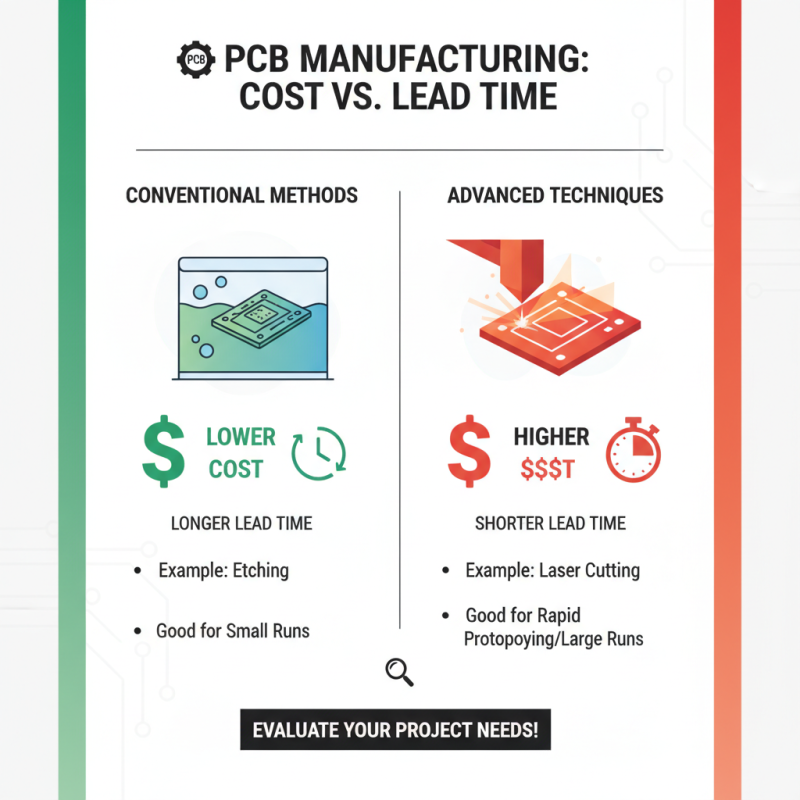
When selecting a PCB manufacturing process, considering costs and lead times is essential. Different processes can greatly impact your project timelines and budget. For instance, conventional methods like etching may be cost-effective for small runs but can take longer. On the other hand, advanced techniques like laser cutting reduce manufacturing time but may result in higher costs. Evaluating these trade-offs is crucial.
It's also important to account for material costs. High-quality materials may elevate the budget but can improve circuit reliability. Sometimes, a lower initial investment leads to higher maintenance efforts later. This means you might need to question your priorities. Are you looking for speed, cost-saving, or quality? Your answers will drive the decision process.
Lastly, think about future scaling. Some manufacturing processes are not suitable for mass production. If you're aiming for larger quantities later, this could lead to costly adjustments. Reflect on your long-term goals. Evaluating both costs and lead times allows for a more informed choice, aligning manufacturing process with project demands.
Selecting the Optimal Process for Your Specific PCB Project
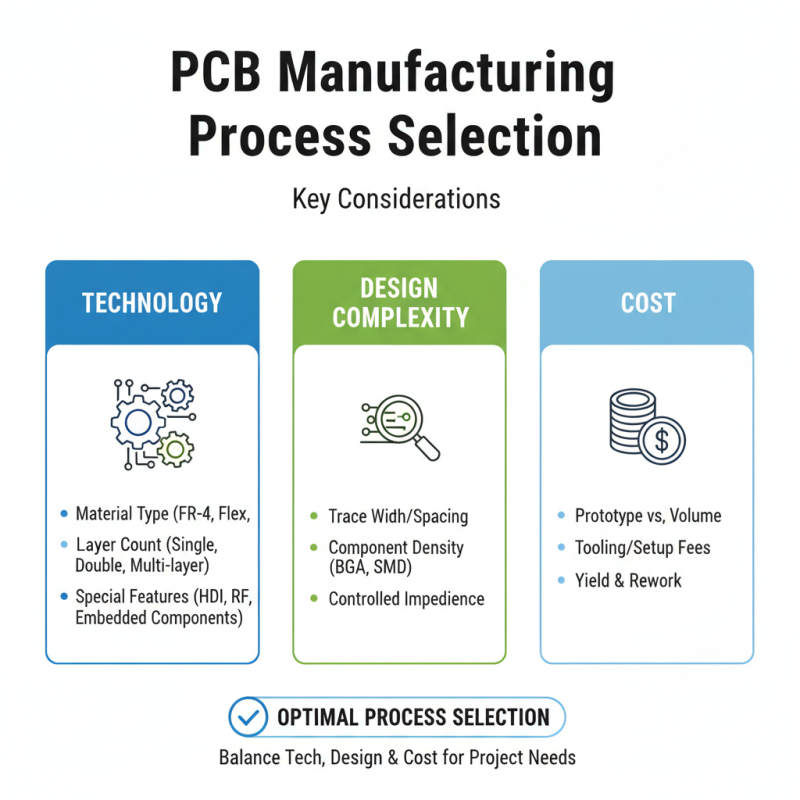
Choosing the right PCB manufacturing process can be daunting. Each project has unique requirements. Technology, design complexity, and cost all play vital roles. Assessing these factors helps in selecting an optimal process.
Consider the specifics of your project. Are you creating prototypes or mass production? Prototypes often benefit from simpler processes. Mass production may require more advanced techniques. Pay attention to material choices too. Some materials provide better thermal conductivity, while others support higher frequencies.
Reflect on your timeline. Rushed projects might lead to compromises on quality. It's crucial to allow time for testing and adjustments. Also, think about the long-term implications. Will this process be sustainable for future projects? Balancing immediate needs with future goals can be challenging. Don't hesitate to seek guidance from experts, but remember, the final decision rests with you.