What is a Flexible Printed Circuit and How is it Used?
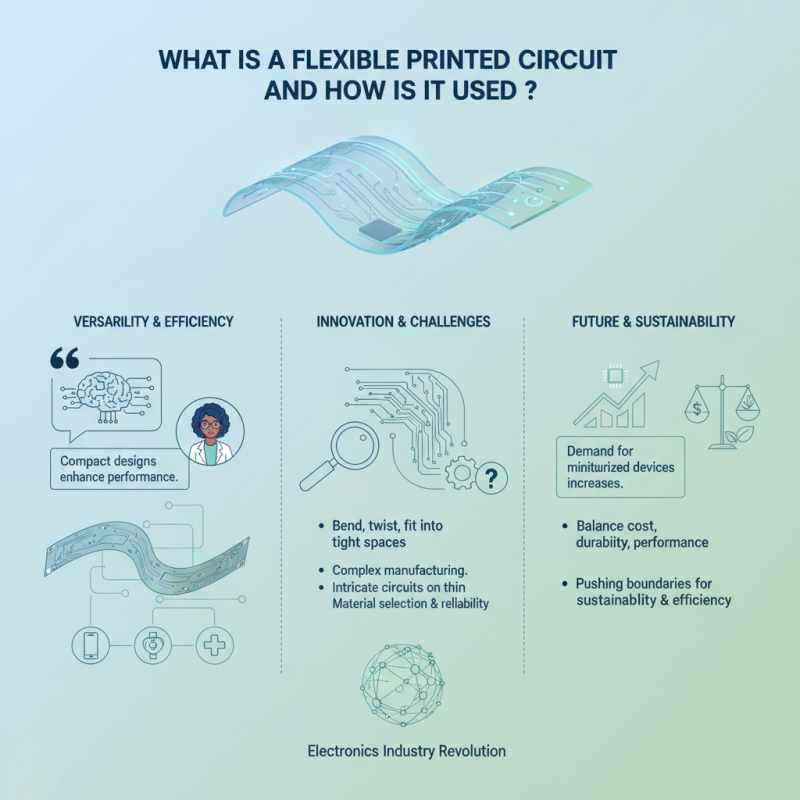
Flexible printed circuits (FPCs) are revolutionizing the electronics industry. They offer remarkable versatility and efficiency for various applications. Renowned expert Dr. Emily Chen once stated, “FPCs enable compact designs that enhance performance.” This statement encapsulates the essence of flexible printed circuits and their significance.
Flexible printed circuits can bend, twist, and fit into tight spaces. They are essential in smartphones, wearables, and medical devices. The ability to create intricate circuits on thin substrates allows engineers to innovate without the constraints of traditional circuitry. However, the manufacturing process can be complex. There are challenges in material selection and performance reliability that require careful consideration.
As demand for miniaturized devices increases, so does the importance of flexible printed circuits. Yet, the industry faces hurdles. Balancing cost, durability, and performance remains a priority. The evolution of FPC technology continues, pushing boundaries while inviting reflection on sustainability and efficiency.
What is a Flexible Printed Circuit?
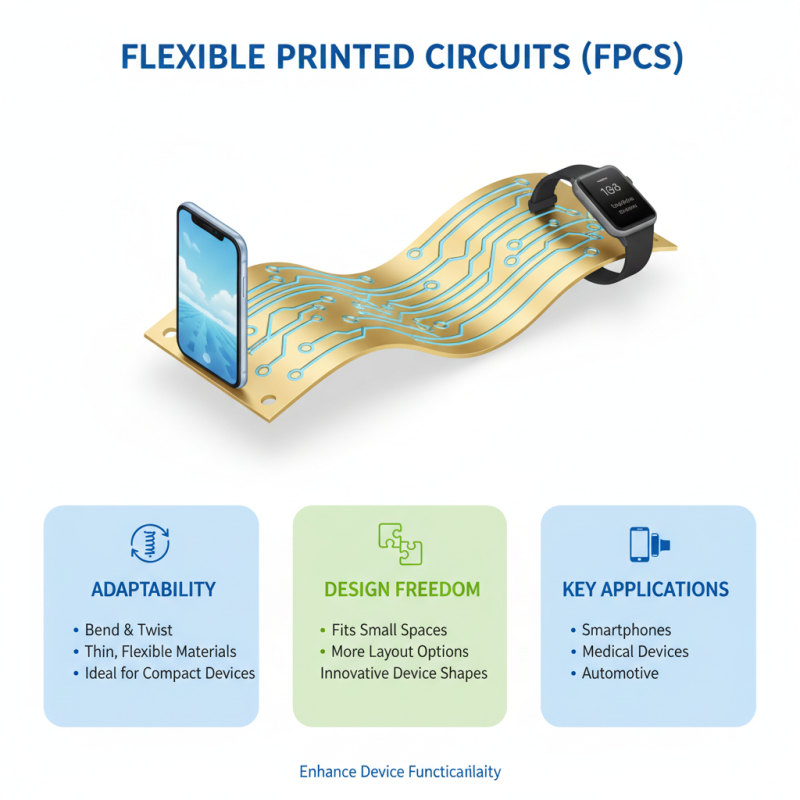
Flexible printed circuits (FPCs) are innovative electronic components designed to enhance device functionality. They consist of thin, flexible materials that can bend and twist. This adaptability makes them ideal for compact electronic devices, such as smartphones and wearable technology. Unlike traditional rigid circuits, FPCs can easily fit into small spaces, providing more design freedom.
One of the most interesting aspects of FPCs is their manufacturing process. They are made from layers of conductive materials, usually copper, laminated onto a flexible base. The precision in etching these circuits is crucial. Any error can lead to malfunction, which is a common challenge in production. Engineers must carefully examine each circuit design, reflecting on aspects that may not work as anticipated.
Moreover, FPCs face limitations. They may not handle as much power as rigid options. This can be a concern in high-performance applications. Manufacturers are exploring new materials to overcome these challenges, but the journey is ongoing. They are learning from each step, striving to improve reliability and performance in future designs.
Types of Flexible Printed Circuits and Their Characteristics
Flexible printed circuits (FPCs) are essential in modern electronics. They come in various types, each with unique characteristics that suit different applications. One common type is the single-sided FPC, which consists of a flexible substrate with conductive traces on one side. This design is simple and cost-effective, making it ideal for basic electronic devices like remote controls or simple sensors.
Another type is the double-sided FPC. This version features conductive traces on both sides of the substrate. The ability to have more connection points allows for more complex applications, such as in smartphones and wearable devices. However, they require precise alignment during manufacturing, which can complicate production. Multi-layer FPCs are even more intricate, consisting of several conductive layers. These are used in high-density applications like computer motherboards and advanced medical devices. They provide excellent signal integrity but can also increase production challenges.
Crafting flexible printed circuits often presents hurdles. Achieving the right balance between flexibility and durability is essential. The selection of materials also plays a critical role. For instance, choosing the wrong substrate may lead to failures in performance. There’s always room for improvement in design and materials. Thus, continuous innovation is needed to refine FPC technology.
What is a Flexible Printed Circuit and How is it Used? - Types of Flexible Printed Circuits and Their Characteristics
| Type of Flexible Printed Circuit |
Material Used |
Layer Count |
Applications |
Characteristics |
| Single-Sided Flexible Circuit |
Polyimide |
1 |
Wearable devices, LED lights |
Cost-effective, lightweight |
| Double-Sided Flexible Circuit |
Polyimide |
2 |
Smartphones, tablets |
Versatile, allows for more complex routing |
| Multi-Layer Flexible Circuit |
Polyimide, FR-4 |
3 or more |
Medical equipment, aerospace |
Compact design, high density |
| Rigid-Flex Circuit |
Polyimide, copper |
Variable |
Consumer electronics, automotive |
Durable, facilitates complex designs |
| Sequential Layer Flexible Circuit |
Polyimide |
2-4 |
Robotics, automotive systems |
Enhanced performance, adaptability |
Applications of Flexible Printed Circuits in Various Industries
Flexible Printed Circuits (FPCs) are gaining traction across various industries. Their lightweight and space-saving design makes them ideal for compact devices. According to a market report, the global flexible printed circuit market is projected to reach $30 billion by 2026. This significant growth indicates their increasing relevance in modern technology.
In the automotive sector, FPCs are revolutionizing vehicle designs. They enable sophisticated electronic systems while conserving space and weight. For example, advanced driver-assistance systems rely heavily on FPCs. They efficiently transmit data from sensors to control units. However, the fragility of FPCs can pose challenges during manufacturing and installation.
In healthcare, flexible circuits enhance medical devices, allowing for smaller and more efficient tools. Wearable monitors, for instance, use FPCs to track vital signs continuously. Statistically, the wearable technology market is expected to grow to $62 billion by 2025. Yet, not all applications have been successful. Issues with durability and reliability sometimes arise, prompting engineers to rethink their processes. The ongoing innovation in FPCs reflects both potential and the need for improvement.
Applications of Flexible Printed Circuits in Various Industries
Advantages of Using Flexible Printed Circuits Over Traditional PCBs
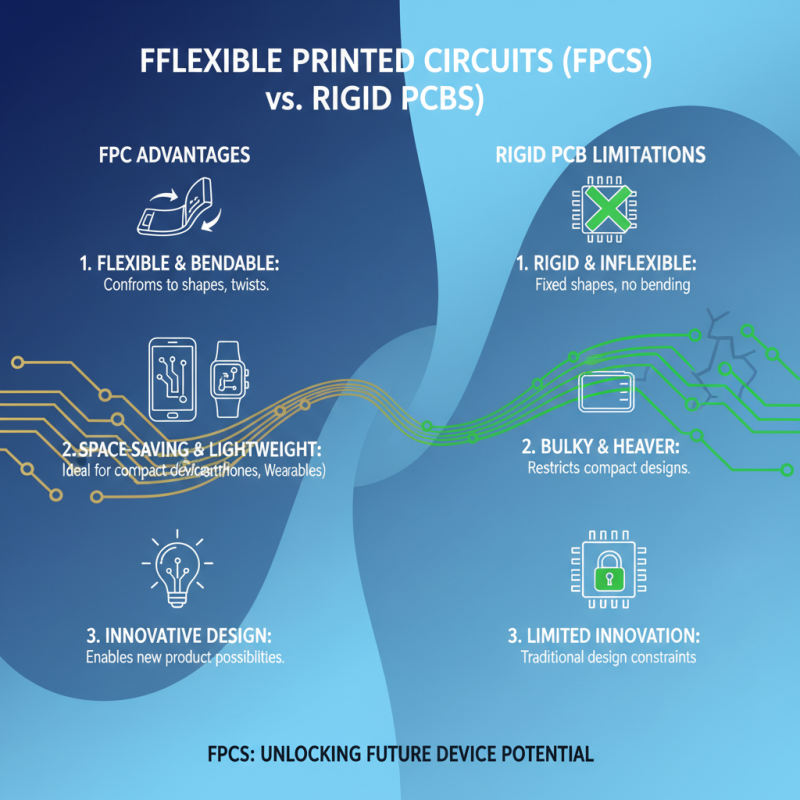
Flexible Printed Circuits (FPCs) offer significant advantages over traditional rigid printed circuit boards (PCBs). These circuits can bend, twist, and fit into compact spaces. They are especially useful in devices where space is limited. For instance, smartphones and wearables often utilize FPCs for their lightweight and versatile design. This flexibility allows for a more innovative approach to product development.
One key benefit of FPCs is their ability to reduce the overall size and weight of electronic assemblies. Traditional PCBs can be bulky and restrictive. In contrast, FPCs can conform to various shapes, making them an ideal choice for modern electronics. Additionally, they minimize the number of interconnects, which can lead to fewer points of failure. However, designing FPCs can be challenging. The manufacturing process requires precise alignment and can sometimes result in defects if not handled carefully.
Another important consideration is cost-efficiency. While the initial investment for FPCs may be higher, the long-term benefits can outweigh these costs. They can potentially lower assembly costs due to reduced material requirements. Nevertheless, some companies hesitate to adopt FPCs due to unfamiliarity or lack of expertise. It's crucial for engineers and designers to evaluate their options thoroughly. Each application may present unique challenges and opportunities.
Manufacturing Processes for Flexible Printed Circuits and Techniques
Flexible printed circuits (FPCs) are essential in the electronics industry. They offer adaptability and can fit into confined spaces. The manufacturing process for FPCs involves several techniques that ensure durability and efficiency.
Layering materials is crucial. A standard FPC consists of copper traces on a flexible substrate. Heat and pressure are applied during lamination to bond layers securely. This process must be precise. Any inconsistency can lead to failures later. Each circuit design requires careful consideration of material selection.
Tips: Always validate the design using simulation tools. This can prevent costly errors. Testing prototypes before full production is essential. Don't overlook the importance of quality control throughout the manufacturing process. Small mistakes in early stages can lead to bigger issues.
Surface treatments add to the FPCs' longevity. They protect against moisture and corrosion. However, not all treatments suit every application. Testing should guide the final choice. Balancing function and cost often leads to tough decisions.