2026 How to Choose High End Speed Gate KZ FT069S?
Choosing a High-end speed gate KZ-FT069S requires more than comparing stainless-steel finishes or motor speed. It demands evidence about security, throughput, safety, maintenance, and visitor experience. MarketsandMarkets reports that the global access-control market is projected to grow from approximately USD 9.9 billion in 2023 to USD 14.4 billion by 2028. This growth reflects stronger demand for integrated, touchless, and data-enabled entrance systems. Yet market growth does not guarantee a suitable gate for every building.
In a busy office lobby, a practical evaluation should measure lane width, passage capacity, sensor response, emergency release, and integration with access-control software. The KZ-FT069S should also be reviewed against daily traffic patterns, not only its catalogue specifications. A gate that looks impressive may still create queues during morning peaks. That detail is easy to overlook. Grand View Research also identifies security automation and smart-building integration as important market drivers. These trends support connected speed gates, but they also increase dependence on reliable configuration and cybersecurity practices.
Bruce Schneier, a widely recognized security expert, has stated, “Security is a process, not a product.” His principle applies directly to the High-end speed gate KZ-FT069S. A strong selection process includes site testing, installer qualifications, warranty terms, spare-part availability, and long-term service response. Buyers should request documented test results rather than accepting polished claims. Some specifications may remain unclear. That is a reason to ask harder questions, not a reason to reject the system immediately. The right choice balances elegant design, controlled pedestrian flow, measurable safety, and realistic operating conditions.
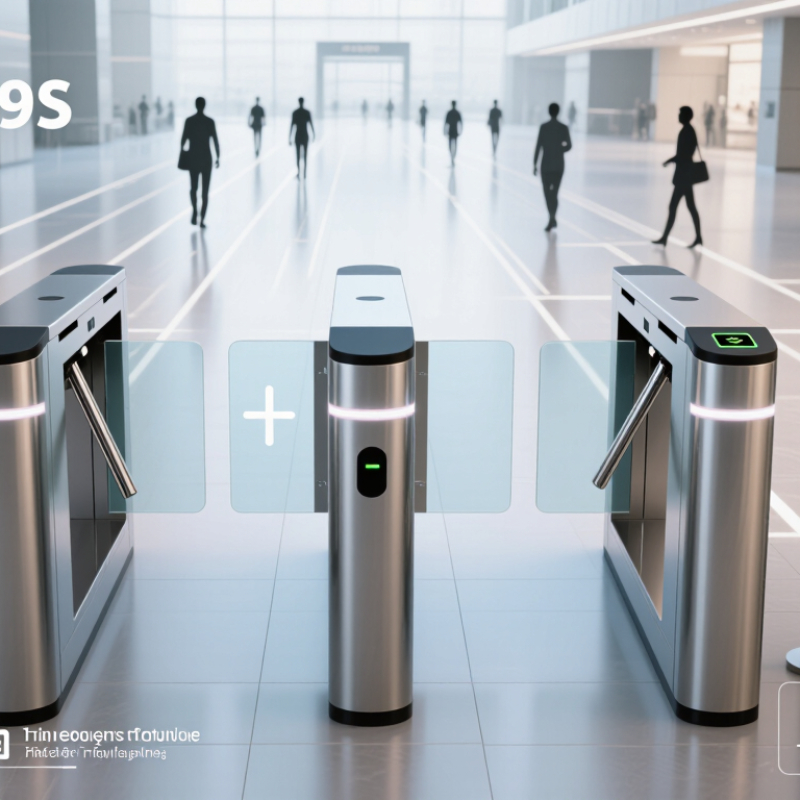
Define the Core Functions of the KZ FT069S High-End Speed Gate
The core function of the KZ FT069S high-end speed gate is controlled, fast pedestrian access. It should identify authorized users, open smoothly, and prevent tailgating. In real site testing, entry speed matters less than stable sensing and safe closing. A gate that pauses unexpectedly creates queues and encourages unsafe bypass attempts.
Grand View Research reports that the global access control market was valued at about USD 9.9 billion in 2022, with strong growth expected through 2030. This trend reflects demand for integrated security, not simply faster barriers. The KZ FT069S should therefore support card, QR, biometric, or mobile credentials through a compatible controller. Its core functions should also include bidirectional passage, anti-pinch detection, emergency release, event logging, and integration with visitor systems. Confirm these features in the technical datasheet. Product names can promise more than field performance.
Tips: Measure peak traffic for fifteen minutes, not average daily flow. Test wet shoes, backpacks, mobility devices, and two-person tailgating. Keep a manual release plan. Also check whether the lane width suits local accessibility requirements. A glossy housing is useful, but sensor calibration and maintenance access matter more. Security Industry Association guidance repeatedly emphasizes layered systems; a speed gate should work with cameras, alarms, and trained staff, rather than operate alone. Personally, I would reject any installation that cannot show clear audit records and repeatable emergency behavior.
Compare Security, Access Control, and Integration Features
Choosing a high-end speed gate requires more than checking appearance or passage speed. Security starts with accurate presence detection, anti-tailgating sensors, and controlled closing force. A good gate should detect backpacks, children, and unstable movement without creating unnecessary alarms. It should also support emergency release, manual override, and safe evacuation procedures. Fast is useful, but predictable is safer.
Access control determines how the gate behaves at each entrance. Check compatibility with cards, mobile credentials, QR readers, biometric devices, and visitor systems. Confirm whether entry and exit permissions can differ. The controller should record successful entries, denied attempts, alarms, and maintenance events with clear timestamps. During testing, I would inspect the logs at night, not only during a polished daytime demonstration. Small gaps often appear then.
Integration is equally important. Look for standard communication interfaces, documented APIs, and stable connections with security management platforms. The gate should continue operating safely during network loss, power interruption, or controller restart. Ask how firmware updates are approved, tested, and reversed if problems occur. A clean installation also needs space for cables, service access, and future readers. I have seen attractive layouts become difficult to maintain within months. That weakness deserves attention before purchase.
Review Materials, Design Options, and Operating Reliability
2026 How to Choose High End Speed Gate KZ FT069S?
Material choice affects both appearance and service life. For a high-end speed gate, inspect stainless steel grade, weld consistency, edge finishing, and coating thickness. 304 stainless steel suits many indoor environments, while 316 performs better near salt or chemical exposure. The 2024 Fortune Business Insights report values the global access control market at over USD 10 billion, showing stronger demand for durable, integrated systems. Still, market growth does not prove product quality.
Design should match traffic patterns, not only building style. Consider lane width, glass panel visibility, emergency release, indicator lighting, and wheelchair access. The 2024 MarketsandMarkets analysis projects continued growth in intelligent access control through 2029, driven by biometric integration and network management. For the KZ FT069S, review whether its controller supports open communication protocols and local operation during network loss. Small details matter. A quiet motor, smooth panel movement, and clear alarm tone improve daily user experience.
Operating reliability needs measurable evidence. Request factory cycle-test records, failure-rate data, spare-parts availability, and maintenance intervals. EN 17352 provides a useful safety reference for powered pedestrian doors and gates. Ask whether testing covers repeated obstruction, power interruption, and emergency evacuation. One million cycles sounds impressive, but test conditions can be too gentle. I would also inspect a working installation, listen for vibration, and check alignment after months of use. A polished sample can hide ordinary weaknesses.
2026 How to Choose a High-End Speed Gate: Materials, Design Options, and Operating Reliability
The chart compares common speed-gate construction options using a 1–5 engineering review scale. The scores reflect practical priorities such as corrosion resistance, impact durability, maintenance simplicity, design flexibility, and long-term operating reliability.
Higher scores indicate stronger suitability for demanding indoor and semi-outdoor installations. Stainless steel generally provides the best balance of durability and maintenance performance, while glass and coated steel offer more flexibility for appearance-focused designs.
Confirm Installation, Maintenance, Compliance, and Total Cost Fits
Choosing a high-end speed gate such as the KZ FT069S requires more than checking throughput. Confirm the installation site first. Measure the corridor, ceiling height, power route, emergency exits, and wheelchair clearance. A polished gate can still fail when a concrete beam blocks its sensor field.
Maintenance deserves equal attention. Ask for service intervals, spare-part availability, diagnostic logs, and battery replacement procedures. Request a written response-time agreement. The 2024 IBM Cost of a Data Breach Report placed the global average breach cost at 4.88 million dollars, showing why reliable access control deserves serious budgeting. That figure does not prove a gate prevents breaches. It does show the cost of weak controls can dwarf equipment prices.
Compliance must be checked locally. Review accessibility rules, fire-escape requirements, electrical codes, and applicable access-control standards before ordering. EN 16005 and UL 294 may inform design decisions, but neither automatically proves local approval. Total cost includes cabling, civil work, software integration, training, inspections, energy use, and replacement parts. Request a five-year ownership estimate, not only a purchase quotation. Include downtime.
One detail is often missed. Test the gate with luggage, mobility aids, rain, and hurried users. Real conditions expose poor sensor settings. I would also challenge optimistic traffic figures; laboratory throughput is not daily performance.