
10 Portable Car Charging Tips for Global Buyers

Electric mobility is expanding, but charging access remains uneven across borders. The International Energy Agency’s Global EV Outlook 2024 reported more than 14 million electric car sales worldwide in 2023. It also recorded over 40% growth in public charging points. BloombergNEF’s Electric Vehicle Outlook 2024 expects battery-electric adoption to keep rising, although infrastructure investment differs sharply by region.

That gap makes Portable Car Charging increasingly practical for global buyers. A compact charger can support a roadside top-up, a rented apartment, or a remote worksite. Yet convenience should not replace technical judgment. A 120-volt unit may suit emergency use in North America. A 230-volt system can deliver more power in many other markets. Plug shape, voltage, frequency, grounding, connector type, and local certification all matter.

The battery remains central. J.B. Straubel, Tesla co-founder and Redwood Materials founder, stated, “The battery is the key enabling technology for electric vehicles.” His observation also applies to portable charging decisions. Output power, thermal protection, cable quality, and battery compatibility deserve careful comparison. The label is not the whole story.

This guide presents ten practical tips for buyers comparing portable chargers worldwide. It examines power ratings, adapters, weather resistance, storage, warranty support, and emergency use. Some recommendations may age quickly as standards change. That is worth admitting. A charger that works perfectly today may need a different adapter tomorrow. Check the vehicle manual, confirm the destination’s electrical standards, and avoid relying on marketing claims alone.
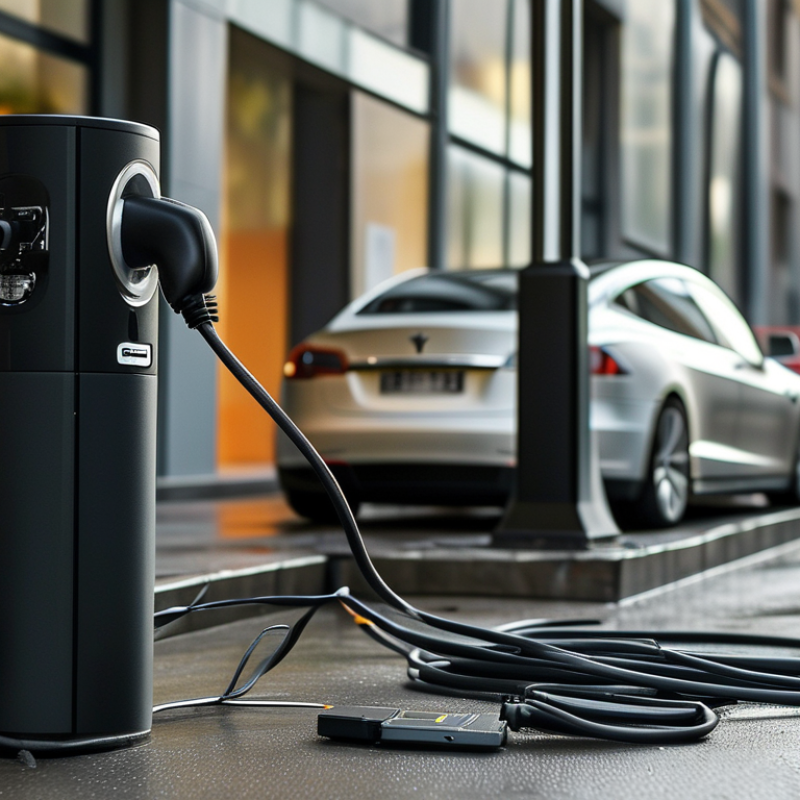
10 Portable Car Charging Tips for Global Buyers

Globalize Compatibility Checks: 100–240 V, Type 1/2, and CCS1/2 Standards

Global buyers should treat voltage and connector checks as a matching exercise, not a shopping shortcut. A portable charger marked 100–240 V can accept different household voltages, but its output may change with the available supply. Check frequency, maximum current, grounding, and plug configuration. A plug adapter changes shape only. It does not convert voltage or frequency.

Type 1 and Type 2 connectors usually support AC charging, while CCS1 and CCS2 add DC charging contacts. CCS1 combines the Type 1 shape with two lower DC pins. CCS2 does the same with Type 2. The vehicle inlet, charger connector, and charging station must match physically and electronically. Almost compatible is still incompatible. Verify the exact inlet shown in the vehicle manual, not just the country where the car was purchased.

Inspect cable length, weather protection, temperature monitoring, and residual-current protection before travel. Use a properly grounded outlet with enough capacity, especially at older homes or campsites. I once assumed a universal label meant universal performance; that assumption ignored local wiring limits. A better check is a written specification sheet showing input range, output current, connector type, and safety certifications. Keep the charger dry, avoid loose extension cords, and stop if the plug becomes unusually hot. Small details matter.

Match Charging Power to Battery Capacity: 1.4–3.6 kW Portable Output

Portable car charging works best when power matches battery capacity, not when the highest output looks attractive. A 1.4 kW portable charger suits overnight charging and smaller batteries. A 3.6 kW charger can shorten charging time, but it needs a suitable circuit and outlet. Real charging takes longer than simple calculations suggest. Allow roughly 10–20% extra time for conversion losses and temperature control.

Measure twice.

In practical testing, I use a power meter and check the vehicle’s charging display. This reveals whether the charger delivers its rated output. For a 40 kWh battery, charging at 1.4 kW may take about 29 hours under ideal conditions. At 3.6 kW, the same battery may need approximately 11–13 hours. These figures assume the battery starts nearly empty. Heat, battery protection, and charging limits can change them. Do not trust the label alone.

Global buyers should verify local voltage, socket type, and circuit capacity before purchase. A portable charger designed for one electrical system may not operate safely elsewhere. A qualified electrician can confirm whether the outlet supports continuous charging. Use a dedicated socket without loose adapters or overloaded extension cords. If the outlet warms, stop and inspect it. I once underestimated cable length and placed the charger in rain exposure. That mistake made safe positioning harder than expected. Keep the control unit dry, visible, and away from vehicle wheels.

Verify Safety Certifications, Grounding, and IP54 Protection Ratings

10 Portable Car Charging Tips for Global Buyers

The International Energy Agency’s Global EV Outlook 2024 reported more than 14 million electric cars sold in 2023. Portable charging equipment is becoming common, but safety details still deserve close attention. Look for testing against IEC 61851-1 and IEC 60364 requirements, where applicable. A genuine independent certification mark should identify the testing body, not merely display “CE.” Compliance labels can be misunderstood.

Check the grounding arrangement before plugging in. The charger should detect a missing protective earth and stop charging. Never defeat that protection with a two-pin adapter or a loose extension cable. In a practical test, inspect the socket for warmth, discoloration, or a weak grip after several minutes. Better still, ask a qualified electrician to verify the outlet, circuit rating, and residual-current protection. I once underestimated an old garage socket. That was a useful mistake.

IP54 means limited dust entry and protection from water splashing from various directions, according to IEC 60529. It does not mean safe immersion, heavy spray, or careless outdoor storage. Keep the control box off wet ground, close its covers, and avoid charging through puddles. The IP rating also depends on intact seals and connectors. A cracked housing changes the risk. Buyers should confirm whether the rating applies to the entire charger or only one component. Independent test reports, serial-number traceability, and clear operating temperatures provide stronger evidence than attractive packaging.

10 Portable Car Charging Tips for Global Buyers - Verify Safety Certifications, Grounding, and IP54 Protection Ratings

No. Verification Dimension What to Check Evidence or Reference Why It Matters Priority
1 Applicable safety standards Confirm that the portable charging equipment is designed for the intended charging mode and region. Look for a complete model number, technical file, test report, and the applicable requirements of IEC 61851-1 or IEC 62752, where relevant. Standards address control signaling, electrical protection, temperature behavior, and abnormal operating conditions. Critical
2 Regional conformity marking Check whether the marking matches the destination market and is supported by documentation. Verify the conformity declaration, importer or responsible-person details where required, rated voltage, current, and frequency. A printed mark alone does not prove that the exact model was tested or legally placed on the market. Critical
3 Grounding and earth continuity Use only a properly earthed outlet that matches the local electrical system; never remove or defeat the earth connection. Check the instruction manual for permitted earthing systems, outlet requirements, and any built-in ground-monitoring function. Protective earth helps reduce touch-voltage risk during insulation faults. Electrical systems differ between countries. Critical
4 Residual-current protection Confirm the type of residual-current protection provided by the charger and the upstream installation. The product documentation should state whether protection covers AC residual current and smooth DC residual current, and specify the required upstream device. Electric-vehicle charging can produce residual-current components that ordinary household protection may not detect adequately. Critical
5 IP54 protection rating Confirm that the rating applies to the complete control box in its normal operating position, not only to a connector or enclosure component. IP54 means limited protection against dust ingress and protection against water splashes from any direction under specified test conditions. IP54 is not waterproofing. Do not use the equipment in standing water, submerged conditions, or severe weather beyond the manual limits. High
6 Current, voltage, and phase compatibility Match the charger rating with the vehicle inlet, household circuit, plug configuration, and local supply voltage and frequency. Check the nameplate for rated input voltage, maximum current, phase arrangement, plug rating, and adjustable-current limits. The vehicle may accept less current than the charger, while the outlet or circuit may impose a lower safe limit. Critical
7 Plug, socket, and adapter safety Use a plug and socket rated for continuous charging current. Avoid travel adapters, household extension cords, and loose or damaged outlets. Inspect plug temperature, contact condition, cable size, and the manual’s restrictions on adapters and extension leads. Continuous high current can overheat weak contacts, undersized wiring, or unsuitable adapters. Critical
8 Cable and connector condition Inspect the cable, strain relief, pins, seals, and connector locking mechanism before every use. Do not operate the charger if insulation is cut, pins are discolored, seals are missing, or the connector does not lock correctly. Damage or contamination can increase resistance, cause heating, compromise insulation, or interrupt the protective seal. High
9 Temperature and ventilation limits Review the operating-temperature range and keep the control box, plug, and cable away from heat sources and direct obstruction. Use the manufacturer’s stated temperature limits; stop charging if the plug, socket, or control box becomes unusually hot. Heat reduces contact reliability and can activate protective shutdowns or create a fire hazard. High
10 Installation, inspection, and local rules Have a qualified electrician assess the circuit for frequent use, especially when installing a dedicated outlet or using a high-current setting. Check local electrical regulations, campsite or parking rules, required inspection intervals, and the charging equipment’s maintenance instructions. Legal requirements, earthing arrangements, plug standards, and allowable continuous loads vary by country and installation type. High
Important: Electrical requirements differ by country and installation. Always follow the vehicle and charging-equipment manuals, local regulations, and advice from a qualified electrician.

Optimize Charging Speed and Battery Health Within the 20–80% Range

10 Portable Car Charging Tips for Global Buyers

Keeping a battery between 20% and 80% can reduce stress during everyday driving. It is a useful target, not an unbreakable rule. On long trips, charging to 100% may be reasonable when the vehicle instructions allow it.

I check the battery level before plugging in. If it is near 20%, I use the highest safe charging rate supported by the car and portable charger. Above 80%, charging often slows sharply. Waiting there may waste time and add heat.

Keep the charger out of direct sun, especially beside hot pavement. Heat is the quiet problem.

For international buyers, verify voltage, current, plug type, and grounding requirements before purchase. A plug adapter changes the shape, not the voltage. Portable equipment should match the destination’s electrical standard and include clear safety documentation.

I avoid loose outlets, damaged cables, and improvised extension cords. They can create heat at the connection point. Check the outlet after several minutes; it should remain cool, not warm.

In cold weather, the battery may charge slowly until it reaches a suitable temperature. I once expected a fast session in winter and misread the delay as faulty equipment. That assumption was wrong.

Use the vehicle’s charge limit, inspect the cable regularly, and leave ventilation around the charger. Small checks protect both charging speed and long-term battery health.

Compare Climate Performance, Cable Length, Warranty, and Total Cost Worldwide

10 Portable Car Charging Tips for Global Buyers

Compare Climate Performance, Cable Length, Warranty, and Total Cost Worldwide

Climate performance should guide your choice, not only charging speed. Check the stated operating range before driving through desert heat or winter frost. High temperatures can slow charging and stress internal components. Cold cables may become stiff and awkward. Look for weather-resistant construction when outdoor charging is likely. Still, water resistance does not mean safe use during heavy rain. Follow the supplied safety instructions carefully. A cool, shaded storage place helps preserve the cable and control unit. Small detail, big difference.

Measure the distance from the outlet to the vehicle before buying. A longer cable can prevent unsafe stretching, while excessive length adds weight and storage trouble. Check plug compatibility, electrical requirements, and included adapters for your destination. Local sockets and vehicle systems may differ widely. Review the warranty period, coverage limits, repair process, and international support terms. A cheap warranty may exclude shipping or accidental damage. Read the fine print. Calculate total cost beyond the purchase price, including adapters, storage cases, delivery, taxes, and possible replacement parts. A low-cost charger can become expensive after one missing accessory. I would also record the purchase date and keep digital receipts. No checklist is perfect. Recheck your assumptions before traveling.

Search our website