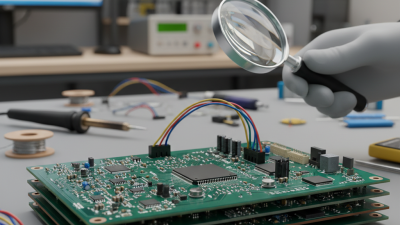
China Top 10 Flex PCB Assembly Suppliers?

China’s flexible electronics sector is expanding quickly, but supplier quality remains uneven. Prismark’s 2024 World PCB Report placed global PCB sales near US$73 billion, reflecting strong demand from automotive, mobile, medical, and industrial devices. Flexible circuits represent a smaller segment, yet their role is becoming more visible. Fortune Business Insights estimates the global flexible printed circuit board market will grow at a double-digit rate through the decade. Different reports use different definitions. That matters.

This guide examines China’s top 10 flex PCB assembly suppliers through practical evidence, not factory photographs alone. We consider SMT accuracy, material traceability, impedance control, bend-cycle testing, cleanliness, engineering support, and delivery consistency. A phone camera module may require microscopic components, tight dimensional control, and a circuit that folds repeatedly inside a space thinner than a coin. These details expose weak processes quickly.

Joe Fjelstad, a recognized flexible-electronics engineer and author, has emphasized a useful principle: “Flex is not simply a rigid PCB made thinner.” The assembly process must respect bending stress, copper grain direction, adhesive behavior, and component placement. IPC standards, supplier audits, and customer references provide stronger evidence than marketing claims. Still, no ranking is permanent. A supplier can pass a first-article inspection and struggle during volume production. That uncomfortable gap deserves attention. We therefore compare documented capabilities, certifications, production experience, and realistic application fit. The best flex PCB assembly partner is not always the largest factory. It is the supplier that can repeat the result.
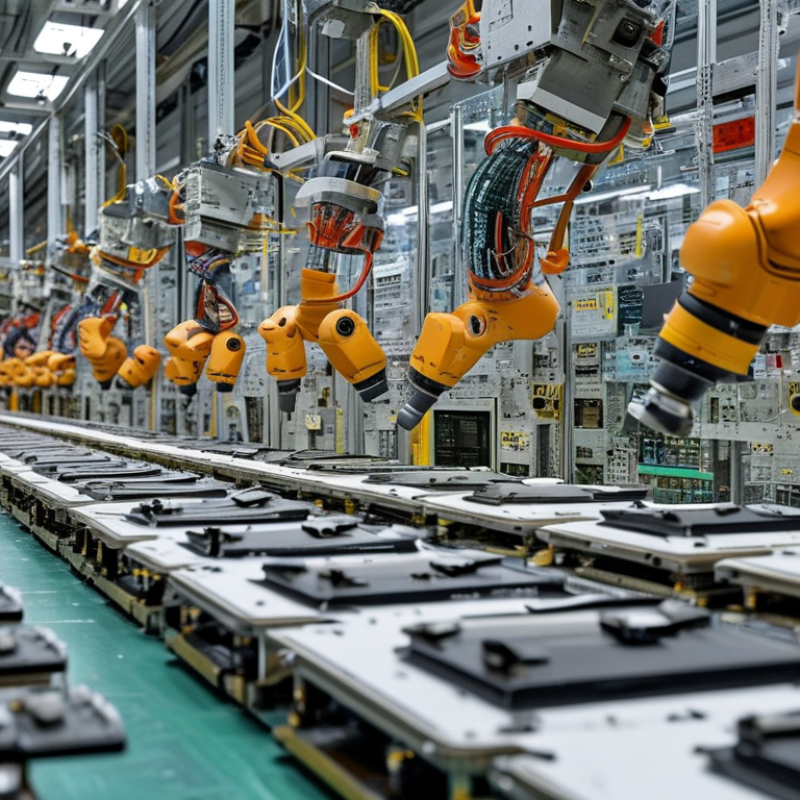
China Top 10 Flex PCB Assembly Suppliers?

What Flex PCB Assembly Involves in China’s Electronics Industry

What Flex PCB Assembly Involves in China’s Electronics Industry

China’s flexible PCB assembly market supports phones, medical instruments, vehicles, and compact industrial devices. A typical project starts with design-for-manufacturing review. Engineers check bend radius, layer alignment, trace spacing, and component clearance. Polyimide material often handles repeated movement better than rigid substrates. However, material choice depends on heat, moisture, and electrical requirements.

Assembly usually combines surface-mount technology with careful handling. Operators load flexible circuits onto carriers before printing solder paste. Pick-and-place machines position small components, while reflow ovens control temperature across thin materials. Automated optical inspection checks solder bridges, missing parts, and shifted components. X-ray inspection may examine hidden joints. The details matter. A tiny misalignment can become a field failure.

Reliable suppliers should provide controlled process records, sample approval, and traceability for materials and batches. They should also explain yield data instead of promising perfection. That point is often overlooked. A practical audit should review humidity control, operator training, calibration records, and corrective-action reports. I would also request bend testing after assembly, not only electrical testing. The process can look efficient while still hiding weak connectors or uneven stiffeners. Better communication between design and factory teams prevents expensive changes later. Yet even experienced teams can miss one detail. That is why repeated verification remains necessary.


How China’s Top 10 Flex PCB Assembly Suppliers Are Evaluated

How China’s Top 10 Flex PCB Assembly Suppliers Are Evaluated

China’s top 10 flex PCB assembly suppliers should not be judged by price alone. Grand View Research estimated the global flexible PCB market at about USD 17.4 billion in 2023, with strong growth expected through 2030. This expansion increases pressure on suppliers to deliver stable quality, not merely fast quotations. Evaluation begins with factory evidence: ISO 9001 systems, IPC-6013 compliance, controlled clean areas, and documented operator training.

A practical assessment examines defect rates, first-pass yield, and traceability from copper foil to final inspection. Auditors should review AOI images, impedance records, peel-strength tests, and solder-joint samples. Supplier claims need verification. A quoted yield may exclude reworked panels, which can distort comparisons. That matters.

Engineering capability also separates serious suppliers from convenient assemblers. Strong teams review bend radius, stiffener placement, adhesive flow, and connector stress before production. They provide DFM feedback with marked-up drawings, not vague promises. IPC’s electronics industry reports repeatedly identify material costs, delivery volatility, and skilled-labor shortages as major operating pressures. Therefore, the top ten should be scored on approved-vendor control, material substitution procedures, capacity data, and recovery plans. A supplier with modern equipment can still fail through weak process discipline. Site audits, sample builds, and three-month delivery records offer more reliable evidence than online rankings.

How China’s Top 10 Flex PCB Assembly Suppliers Are Evaluated

Industry-standard evaluation weights for comparing flex PCB assembly capabilities, without using company or brand-specific data.

Quality and manufacturing capability receive the highest weights because flex PCB assembly requires stable process control, precision production, and consistent electrical performance. Certifications, engineering support, delivery reliability, and cost competitiveness are also essential procurement factors.

Profiles of the Top 10 Chinese Flex PCB Assembly Suppliers

China’s top ten flex PCB assembly suppliers differ by process depth, not only by factory size.

One profile focuses on smartphone-density circuits, using laser drilling and microvia inspection. Another serves medical devices, where traceability, clean handling, and documented operator training matter more than speed. A third specializes in automotive modules, with thermal cycling, vibration tests, and stricter process records.

Other profiles include suppliers experienced in rigid-flex boards, low-volume prototypes, high-mix industrial controls, and fine-pitch wearable assemblies. One supplier emphasizes quick engineering changes, while another maintains automated optical inspection after every major assembly stage. Two more show strength in surface-mount placement and controlled solder profiles. The tenth profile is notable for flexible material sourcing and stable export documentation.

These differences are easy to overlook. A large production floor does not guarantee reliable flex assembly.

Tips:

Request sample inspection reports, stack-up drawings, solder-joint images, and yield data. Confirm bend-radius testing before approving mass production. Ask how the supplier handles warped panels, adhesive residue, and connector stress. A factory may pass an audit yet still struggle with your actual design. Independent testing is worth the extra time. Supplier reviews should examine communication speed, engineering judgment, change control, and after-sales response, not just quoted pricing. Some public rankings also rely on incomplete information, so verify every capability directly.

Comparing Capabilities, Certifications, and Production Services

China Top 10 Flex PCB Assembly Suppliers: Comparing Capabilities, Certifications, and Production Services

China remains a major base for flexible PCB assembly, supported by dense material, tooling, and electronics supply chains. Mordor Intelligence estimates the global flexible electronics market will grow at over 10% annually through 2029. That growth increases pressure on suppliers to prove process control, not only low pricing.

A practical comparison should examine layer count, minimum trace width, bend-cycle testing, impedance control, and component placement accuracy. Strong factories provide SPI, AOI, X-ray inspection, flying-probe testing, and serialized traceability. Production services should cover DFM review, rapid prototyping, small-batch builds, and controlled mass production. IPC-A-610 and J-STD-001 training can support assembly consistency, while ISO 9001, ISO 13485, or IATF 16949 may fit different product risks. Certification scope matters.

A certificate is not proof.

Ask for recent audit records, sample inspection reports, and defect data by process stage. IPC’s 2024 Electronics Industry Pulse data showed continuing pressure on lead times, labor costs, and component availability across electronics manufacturing. Therefore, supplier resilience deserves equal weight. Check approved material lists, alternate sourcing rules, moisture controls, and engineering response times. Grand View Research identifies miniaturization and wearable devices as major flexible circuit growth drivers, yet many supplier profiles still omit dynamic-flex testing details. That omission should invite questions. A polished capability sheet can still be incomplete.

How to Choose the Right Flex PCB Assembly Supplier in China

China Top 10 Flex PCB Assembly Suppliers?

How to Choose the Right Flex PCB Assembly Supplier in China

A ranking can start your search, but it should not make the final decision. Flex PCB assembly requires stable handling, accurate placement, and controlled bending during production. Ask whether the supplier has experience with your layer count, component density, and flexible material type. Request sample assemblies, not only catalog photographs. Small details matter, such as clean connector edges and consistent solder joints.

Review the supplier’s quality system and production records. Confirm traceability for materials, solder paste, components, and inspection results. Reliable suppliers should explain their testing process, including electrical tests, visual inspection, and assembly stress checks. Ask for manufacturing feedback before ordering. A skilled engineer may identify an unsafe bend radius or an unsuitable stiffener early. That saves time.

Do not choose by price alone. A low quote may exclude tooling, testing, or rework. I once treated fast communication as proof of competence. It was not enough. Compare response quality, engineering questions, factory capacity, and corrective-action procedures. Check whether the supplier can protect design files and follow agreed specifications. A video audit or independent inspection can reveal practical issues, including crowded work areas and poor material storage. Some suppliers may promise everything. Their process evidence matters more.

Search our website