China Top Flex PCB Manufacturers for Global Buyers

China has become a major sourcing destination for flex PCBs, serving automotive, medical, consumer electronics, and industrial equipment companies. Its manufacturing base combines material access, engineering talent, and scalable production. However, choosing a reliable supplier requires more than comparing prices or viewing polished factory photographs.

This guide examines China’s leading flex PCB manufacturers through practical criteria. These include layer capability, minimum trace width, bending performance, material control, prototype speed, and production consistency. Experienced buyers should also review certifications, test reports, inspection procedures, and customer support. A capable manufacturer can explain copper thickness, coverlay selection, impedance requirements, and dynamic-flex limitations in clear language. Small details matter. A sharp bend radius or poorly controlled adhesive layer can cause field failures.

The companies discussed here may serve different purchasing needs. Some focus on rapid prototypes, while others specialize in high-volume automotive or medical production. Buyers should request samples, review quality records, and confirm whether quoted specifications match actual manufacturing limits. Factory audits and third-party testing can provide additional confidence, especially for safety-sensitive applications. Still, no supplier profile remains permanently accurate. Equipment changes, staffing shifts, and material shortages can affect delivery and quality. That reality deserves attention.

Rather than presenting one universal winner, this overview helps global buyers compare flex pcbs manufacturers with greater discipline. It considers technical expertise, communication habits, compliance practices, and long-term reliability. The best decision often comes from asking uncomfortable questions early, before a promising quotation becomes an expensive production problem.
China Top Flex PCB Manufacturers for Global Buyers

What Flex PCBs Are and Why China Serves Global Buyers

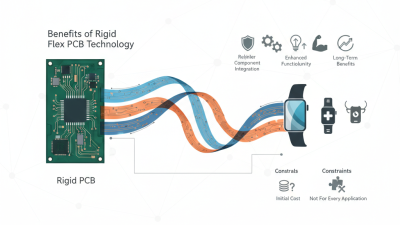
Flex PCBs are circuit boards built on thin, bendable materials instead of rigid fiberglass. Their copper traces can fold, twist, or fit around tight spaces. They are common in cameras, medical devices, vehicle displays, and compact consumer electronics. They save space and reduce wiring, but they demand careful design.

They bend. Fit matters.

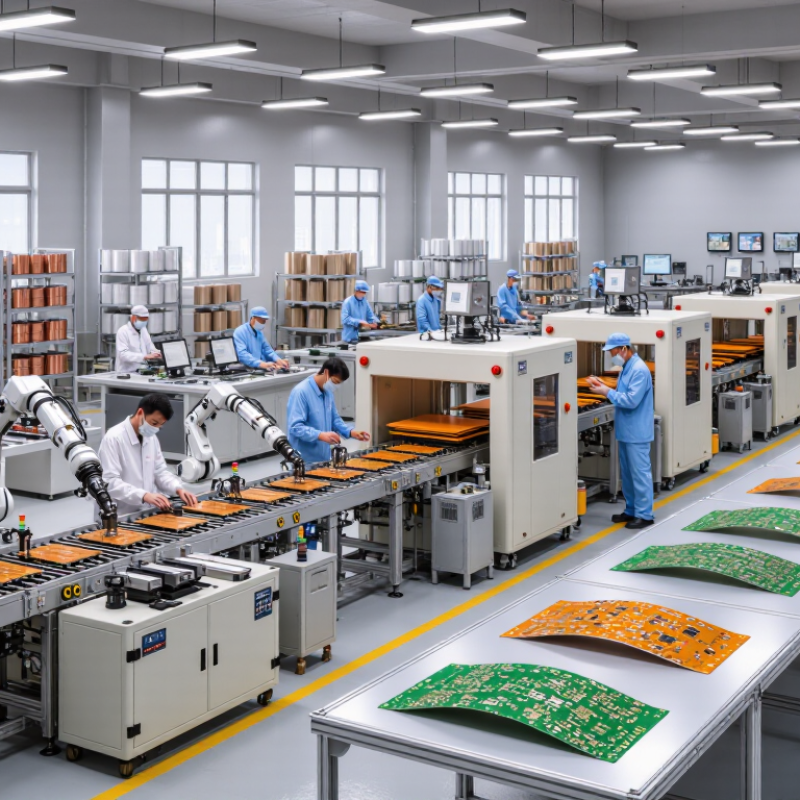
China serves global buyers because its electronics supply chain is broad and closely connected. Material suppliers, circuit fabricators, assembly plants, and testing laboratories often operate within reachable distances. This can shorten communication and support faster sample development. Experienced manufacturers can control layer alignment, copper thickness, coverlay placement, and bend-radius requirements during production. A practical factory review should examine cleanroom conditions, inspection records, sample consistency, and staff responses to technical questions.

Global buyers also benefit from established export experience and flexible production volumes. A capable supplier may support prototypes, small batches, and later mass production without changing the entire process. Yet low prices should not be the only measure. I have seen specifications appear clear until bending tests reveal weak plating or stress cracks. Small errors matter. Buyers should request material data, dimensional tolerances, electrical test methods, and reliability results before placing large orders. China offers strong manufacturing depth, but supplier quality still varies, and careful verification remains necessary.


How to Evaluate China’s Top Flex PCB Manufacturers

China Top Flex PCB Manufacturers for Global Buyers

How to Evaluate China’s Top Flex PCB Manufacturers

China remains a major production base for flexible printed circuit boards. Mordor Intelligence’s 2024 market assessment estimates the global flex PCB market will grow at about 8% annually through 2029. This growth increases supplier choices, but also increases evaluation risks. A capable manufacturer should provide traceable material records, controlled cleanroom processes, and documented inspection results. Ask for capability tables covering minimum trace width, bend radius, copper thickness, layer count, and panel size. Do not rely on attractive samples alone.

Production quality needs measurable evidence. Request first-article reports, flying-probe or electrical-test records, and defect data from recent lots. Check whether the factory follows IPC-6013 and IPC-2223 design requirements. ISO 9001 certification supports process control, but it does not guarantee excellent flex performance. For automotive projects, relevant automotive quality certification and change-control procedures deserve closer review. IPC’s 2024 PCB industry findings also highlight continuing pressure from material costs, delivery demands, and capacity planning. A supplier should explain how it manages these pressures without quietly changing materials.

Tips: Send the same Gerber files to three factories. Compare stackups, DFM comments, sample timing, and quoted tolerances. Ask for a live production walk-through or independent audit. I once treated a low quotation as efficiency. It was not. The factory had excluded testing and stiffener costs. That mistake was preventable. Also review packaging, moisture protection, corrective-action reports, and communication speed. A polished presentation means little when engineering answers remain vague.

Key Manufacturing Capabilities and Quality Standards

China’s leading flex PCB manufacturers support global buyers with controlled, repeatable production.

Their capabilities often include single-sided, double-sided, and multilayer flexible circuits. Advanced lines handle laser drilling, fine-pitch traces, stiffeners, and rigid-flex assemblies. Experienced engineers also review bend radius, copper thickness, and coverlay placement before production. These details affect assembly yield and field reliability.

Quality standards must be visible, not merely promised. Reliable factories use incoming material inspection, automated optical inspection, flying-probe testing, and microsection analysis. They verify impedance, insulation resistance, dimensional accuracy, and solderability. Process records should connect each shipment to materials, operators, equipment, and test results. Certifications such as ISO 9001 and IPC-based workmanship controls can strengthen buyer confidence. Still, certification alone cannot replace practical audits.

Tips: Ask for capability tables, sample inspection reports, and controlled bend-test data. Confirm the factory’s minimum trace width, copper range, layer limits, and prototype lead time. Request a documented corrective-action process. A clear response matters. Buyers should also review packaging, moisture protection, and shipment labeling. Small failures often begin there. No manufacturer is flawless, and even strong suppliers may need improvement in documentation or process consistency. That weakness deserves honest discussion before volume production.

Comparing Pricing, Lead Times, and Customization Options

China’s flexible PCB suppliers compete on price, speed, and engineering support. A 2024 Mordor Intelligence estimate values the global flexible PCB market at roughly US$28 billion, with double-digit growth expected through 2029. This demand pressures factories to offer quick quotations. However, the lowest quote may exclude tooling, impedance testing, or yield risks. Buyers should compare complete landed costs, not only the unit price.

Typical lead times range from 10 to 20 working days for repeat orders. New designs may require four to eight weeks, especially with rigid-flex structures, laser drilling, or fine-pitch assembly. IPC industry data continues to show supply-chain uncertainty and uneven order cycles. Therefore, a written production schedule matters. Customization can include polyimide thickness, copper weight, surface finish, stiffeners, shielding, and unusual bend zones. In practice, every extra feature can affect price and delivery. I have seen specifications change late, creating avoidable delays. The design was technically correct, but not production-ready.

Tips: Request a sample panel before mass production. Ask for separate tooling and testing fees. Confirm bend radius with real assembly photos. Keep at least one week of schedule tolerance. A supplier’s engineering team should explain trade-offs clearly, even when the answer is inconvenient.

China Flex PCB Manufacturing Benchmarks for Global Buyers

Indicative industry planning benchmarks comparing lead times, relative pricing, and customization requirements.

Prototype and low-volume orders generally offer shorter lead times but higher unit costs. Standard production provides the best cost efficiency, while complex multilayer or rigid-flex designs typically require longer engineering and manufacturing cycles. The price index uses standard two-layer flex PCB production as the reference value of 100.

How Global Buyers Can Select and Work With a Supplier

Selecting a China-based flex PCB supplier requires more than comparing quotations. IPC’s 2024 PCB Industry Results reported continued pressure on order volumes and pricing, making supplier stability especially important. Ask for recent financial indicators, monthly capacity, equipment lists, and documented quality records. A reliable factory should explain its copper thickness, bend radius, layer registration, and surface-finish controls in practical terms.

Request samples that match your real design. Check dynamic bending, solderability, impedance, dimensional tolerance, and adhesive performance. IPC-6013 provides useful qualification guidance for flexible and rigid-flex printed boards. Also review test reports from accredited laboratories, not only internal inspection sheets. Grand View Research projects strong growth in flexible electronics through 2030, but growth figures do not guarantee every factory can support high-volume production.

Communication habits matter. Share Gerber files, stack-up requirements, annual demand, and expected engineering changes early. Confirm who owns tooling, how engineering changes are approved, and what happens after a failed lot. Use a pilot order before full production, with written acceptance criteria and traceable batch labels. Factory audits should include incoming-material storage, clean handling, electrical testing, and final packing. I would not choose the lowest quote automatically. Cheap material can create hidden rework, though even a careful audit can miss problems. Leave room for technical disagreement; a supplier that only says yes may not be protecting your design.

China Top Flex PCB Manufacturers for Global Buyers - How Global Buyers Can Select and Work With a Supplier

An anonymized supplier-screening comparison for flexible PCB sourcing. The figures represent commonly available manufacturing ranges and buyer verification points in China's flexible PCB supply market; they should be confirmed through current quotations, capability documents, samples, and audits.

Supplier Profile Typical Production Focus Typical Layer Capability Common Finished Board Thickness Prototype Lead Time Mass-Production Lead Time Typical Order Quantity Quality and Process Evidence to Request Export Readiness Best Fit for Global Buyers
Profile A: Prototype-Oriented Flex Supplier Single-sided and double-sided flexible circuits for design validation, sensors, displays, and compact wiring 1–2 conductive layers Approximately 0.10–0.30 mm, depending on copper, coverlay, stiffeners, and surface finish 5–10 working days after artwork and engineering approval 15–25 working days after order and material confirmation From approximately 5–20 pieces for prototypes; production quantity quoted by design Impedance review where required, cross-section samples, solderability records, dimensional inspection, and electrical test results Medium
Confirm export packaging, English documentation, and shipping responsibilities
Early-stage projects, engineering samples, and low-volume product launches
Profile B: High-Volume Consumer Electronics Supplier High-volume single-sided, double-sided, and multilayer flex circuits for portable and space-constrained electronics 1–6 conductive layers Approximately 0.10–0.40 mm, with stiffeners or reinforcement added where needed 7–12 working days 20–35 working days, subject to capacity and material availability Usually suitable for hundreds to tens of thousands of pieces Process capability data, yield reports, automated optical inspection, electrical testing, traceability, and corrective-action records High
Often able to support consolidated shipments, export documents, and scheduled deliveries
Stable recurring demand where unit cost, yield, and delivery consistency are critical
Profile C: High-Density Multilayer Flex Supplier Fine-line, multilayer, rigid-flex, and high-density interconnect applications for medical, industrial, and communications equipment 2–10 conductive layers, subject to stack-up, material, and aspect-ratio limits Approximately 0.20–1.00 mm for flexible or rigid-flex constructions 10–20 working days 25–45 working days Generally better suited to qualified production programs than very small orders Controlled impedance capability, microsection analysis, registration data, bend-cycle validation, material certificates, and engineering-change control High
Request compliance records, controlled documentation, and a named technical contact
Complex designs requiring tight registration, dense routing, controlled impedance, or repeatable mechanical flexing
Profile D: Automotive and Industrial Flex Supplier Flexible circuits and rigid-flex assemblies for transportation, factory automation, power management, and harsh operating environments 1–8 conductive layers, depending on the qualified construction Approximately 0.15–1.20 mm, including reinforcement and rigid sections when applicable 10–20 working days 30–60 working days, including qualification and production scheduling Typically medium to high volume, with formal approval before regular production Reliability testing, thermal cycling, flex-life testing, material traceability, failure analysis, process audits, and documented change notification High
Verify logistics continuity, lot traceability, packaging controls, and business-continuity planning
Products exposed to vibration, temperature variation, repeated movement, or long service life
Profile E: Medical and Reliability-Focused Supplier Low-to-medium volume flexible circuits for diagnostic, monitoring, laboratory, and other reliability-sensitive equipment 1–6 conductive layers Approximately 0.15–0.80 mm, based on the approved stack-up 15–25 working days 30–60 working days after qualification Usually low to medium volume, with stronger documentation requirements Quality-management certification, lot traceability, inspection plans, nonconformance control, reliability reports, and formal change-management procedures High
Confirm regulatory scope, document retention, confidentiality controls, and audit access
Applications where product consistency, records, and controlled processes matter more than the lowest price
Profile F: Cost-Competitive General-Purpose Supplier Standard single-sided and double-sided flex circuits for cables, keyboards, lighting, consumer devices, and general electronics 1–4 conductive layers Approximately 0.12–0.60 mm 7–15 working days 20–40 working days Suitable for prototypes through medium-volume production Confirm bare-board test coverage, incoming-material inspection, solder-mask or coverlay control, packaging method, and warranty terms Medium
Evaluate communication speed, engineering support, and consistency across repeat orders
Price-sensitive projects with conventional geometries and moderate reliability requirements
Buyer verification checklist: provide complete Gerber or ODB++ files, drill data, stack-up, material requirements, bend radius, bend-cycle expectations, stiffener locations, surface finish, impedance targets, annual demand, and applicable inspection standards. For qualification, compare first-article samples, dimensional results, electrical test coverage, reliability data, packaging, Incoterms, payment terms, and the supplier's engineering-change notification process.

Search our website