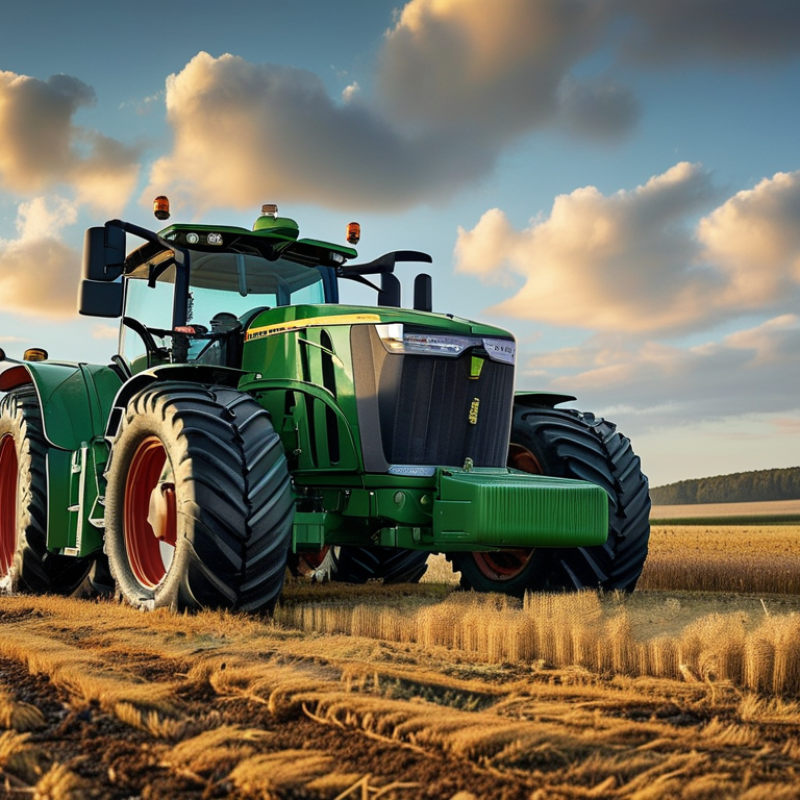
Top 10 Farm Land Tractors for Global Buyers in 2026?
The global agricultural landscape is evolving rapidly, and farm land tractors are at the forefront of this transformation. As farmers seek efficiency and sustainability, these machines play a vital role. John Smith, an industry expert and veteran in the field, emphasizes, "The right tractor can dramatically boost farm productivity and sustainability.”
In 2026, buyers will have a vast array of options available. Understanding which tractors stand out will be crucial for farmers worldwide. Each tractor model offers unique features tailored to specific farming needs. However, the plethora of choices can be overwhelming.
Farm land tractors must not only be powerful but also adaptable to diverse terrains and crops. Farmers need reliable machines that can withstand tough conditions. Reflecting on past experiences, many agree that selecting a tractor can present challenges. Decisions should be based on data, not just brand loyalty.
Top Features to Consider When Choosing a Farm Land Tractor
When selecting a farm land tractor, buyers must consider vital features to maximize efficiency. Engine power is one significant factor. A powerful engine can ensure the tractor handles heavy loads under various conditions. Reports indicate that tractors with at least 75 horsepower are generally the most versatile, capable of completing a wider range of tasks.
Another key aspect is durability. Farmers typically operate tractors in rugged environments. A robust design extends the equipment's lifespan and reduces maintenance costs. Statistics show that durable tractors can last over 10,000 hours if maintained well, translating into better long-term investment.
Versatility is also crucial. Many modern tractors come equipped with advanced technology that allows attachments for numerous tasks, such as plowing, planting, and harvesting. The ability to adapt to different farming needs can significantly enhance productivity. Additionally, ease of use increases efficiency. Intuitive controls and comfortable seating are often cited as essential for reducing operator fatigue.
Consider assessing each aspect carefully during your selection process. Invest time in research, and review industry reports to compare models and features. Engaging with local farming communities can provide insights that improve decision-making. Seek also expert opinions when possible; they can help highlight potential drawbacks overlooked in standard evaluations.
Top 10 Farm Land Tractors for Global Buyers in 2026
| Model | Horsepower | Fuel Type | Transmission | Weight (kg) | Special Features |
| Model A | 150 HP | Diesel | Automatic | 1200 | 4WD, GPS |
| Model B | 200 HP | Diesel | Manual | 1400 | Compact Design |
| Model C | 180 HP | Electric | Automatic | 1150 | Eco-friendly |
| Model D | 220 HP | Diesel | CVT | 1500 | Intelligent Controls |
| Model E | 160 HP | Diesel | Hydrostatic | 1100 | High Maneuverability |
| Model F | 190 HP | Diesel | Automatic | 1300 | User-Friendly Interface |
| Model G | 210 HP | Biofuel | Dual Clutch | 1600 | Sustainable Technology |
| Model H | 140 HP | Diesel | Power Shuttle | 1000 | Compact Build |
| Model I | 230 HP | Diesel | Manual | 1700 | Extended Warranty |
| Model J | 175 HP | Diesel | Automatic | 1250 | Flexible Attachment Options |
Key Brands Dominating the Global Tractor Market in 2026
As the agricultural sector evolves, the tractor market is becoming increasingly competitive. In 2026, key brands are expected to emerge as leaders in this domain. These brands focus on innovation, offering advanced technology and efficient equipment tailored for diverse farm operations. Their commitment to sustainability is noteworthy, utilizing eco-friendly materials and fuel-efficient engines.
Farmers seek reliable tractors that enhance productivity. Thus, manufacturers invest in user-friendly designs and smart features. Automation is becoming commonplace. This shift aims to reduce manual labor while increasing precision in farming tasks. However, not every brand meets these evolving needs, which challenges farmers to make informed choices.
While many brands offer compelling options, some still struggle with reliability and customer service. Buyers often report mixed experiences with certain models. It is crucial for farmers to conduct thorough research. The right tractor should align with specific farming needs and regional conditions. Making the best choice can significantly impact operational efficiency and overall crop yield.
Innovations in Tractor Technology for Enhanced Agricultural Efficiency
As the agricultural sector evolves, tractor technology is advancing quickly. Innovations are driving efficiency and productivity in farming. Farmers are now exploring smart sensors that monitor soil conditions in real-time. This technology helps in precise planting and optimal resource usage.
Electric and hybrid tractors are also gaining attention. Their eco-friendly design reduces carbon footprints while offering high torque for demanding tasks. Autonomous tractors are becoming more prevalent, allowing farmers to focus on other segments of production. Yet, these advancements raise questions about reliability and maintenance.
Despite these exciting innovations, farmers face challenges. The cost of new technology can be prohibitive. Adapting to these advanced systems requires training and adjustment. Moreover, connectivity issues in rural areas can hinder the full potential of smart tractors. Ongoing dialogue in the farming community is essential to address these concerns and ensure that technology serves its intended purpose.
Comparative Analysis of Tractor Models: Strengths and Weaknesses
The global agricultural sector is evolving rapidly. In 2026, farmers are evaluating tractors based on their strengths and weaknesses. Each model presents unique features that can greatly impact farm productivity.
One significant advantage of many tractors is their versatility. They can handle various tasks like plowing, planting, and harvesting. However, some models may lack efficiency at higher speeds, causing delays. It's crucial to consider the specific tasks your farm requires before making a decision.
Maintenance is another area of concern. Regular servicing can prolong a tractor's life, yet some designs may complicate access to key components. Farmers often overlook this when purchasing. Understanding the maintenance needs of each model can help prevent frustration down the line.
In terms of technology, many tractors today incorporate advanced features. GPS navigation and automated systems can enhance precision farming. However, reliance on tech can lead to issues. Familiarity with these systems is essential to avoid operational hiccups. Always weigh the pros and cons of tech-dependent models.
Choosing the right tractor involves careful consideration. Evaluate what aligns with your farming goals. A model that excels in one area may falter in another. Engage with fellow farmers or experts to gather insights before making your choice.
Future Trends in Farming Machinery: What to Expect in 2026
As we look toward 2026, the future of farming machinery is poised for exciting innovations. Technological advancements will shape how farmers operate their land. For instance, autonomous tractors are becoming more mainstream. These machines can navigate fields with minimal human intervention, increasing efficiency. However, integrating new technologies can bring challenges, particularly in training and adaptation.
Sustainability will be a critical focus. Farmers are expected to adopt eco-friendly practices and machinery. Electric tractors and biofuel options will likely gain traction. Yet, the infrastructure for charging these machines remains underdeveloped in many areas. Farmers might face hurdles transitioning to these greener solutions, especially in regions where traditional fuels dominate.
Data-driven farming will also impact machinery choices. Precision agriculture will utilize sensors to optimize resources. This approach can maximize yields but requires significant investment in technology. Not all farmers may have access to the necessary funding for such advancements. The balance between innovation and practicality will be key as we prepare for the future.