
What Makes China the Best Fibc Bags Manufacturer? The answer begins with a complete manufacturing ecosystem. China connects polypropylene producers, circular-loom factories, printing workshops, testing laboratories, and export logistics within one efficient supply chain. This structure helps buyers control cost, lead time, and product consistency.
“Reliable FIBC production is not only about capacity; it is about controlling every meter of fabric,” says David Chen, a packaging quality consultant with more than two decades of bulk-bag experience. His observation reflects a practical reality. A strong Fibc Bags Manufacturer checks fabric strength, seam performance, liner fitting, and safe working load before shipment. Samples are tested under pressure. Finished bags are inspected near the production line, not only inside an office.
China also offers broad customization. Buyers can request coated or uncoated fabric, conductive designs, food-grade interiors, discharge spouts, and printed panels. These options support agriculture, chemicals, minerals, construction materials, and food ingredients. Modern factories often use automated cutting, computerized sewing, and batch traceability systems.
Still, “best” should not mean cheapest. Some suppliers communicate poorly or rely on inconsistent subcontractors. That weakness deserves attention. A careful buyer should review factory records, technical drawings, test reports, and independent inspection options. Site visits can reveal details that brochures hide, including dusty floors, rushed stitching, or missing labels.
China’s advantage is therefore practical rather than absolute. Scale creates opportunity. Discipline creates trust. When both exist, a Fibc Bags Manufacturer can deliver safer bags, clearer documentation, and dependable performance across demanding international supply chains.
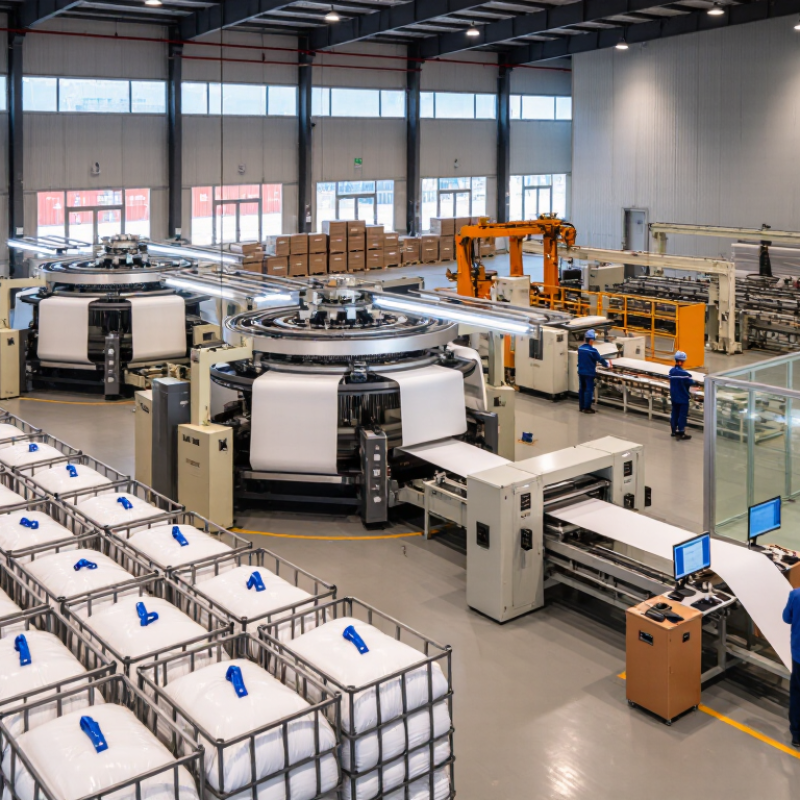
China’s FIBC manufacturing industry has become a major force in global bulk packaging. Grand View Research estimated the global FIBC market at about USD 5.3 billion in 2023. It also projects steady growth through 2030. China benefits from a dense supply chain, including polypropylene production, circular weaving, coating, sewing, testing, and port logistics. This structure helps manufacturers control lead times and customize bags for chemicals, minerals, agriculture, and food ingredients.
UN Comtrade data consistently places China among the leading exporters under HS code 630532. Its global role is not based on low prices alone. Experienced factories can provide laminated fabrics, conductive designs, sift-proof seams, and load testing aligned with ISO 21898. However, scale does not prove superiority. Some suppliers still show uneven stitching, weak documentation, or limited traceability. That gap matters.
Tips: Request recent test reports, production photographs, and a clear inspection plan. Check fabric denier, safe working load, safety factor, and filling conditions. Ask whether samples represent normal production, not a special batch. This small step can reveal large differences. Buyers should also review recycling practices and supplier audit records. China remains highly competitive, but careful verification is still necessary. Perfect consistency is difficult. That deserves honest attention.
China’s FIBC manufacturing strength begins with production scale. Grand View Research valued the global FIBC market at about USD 6.6 billion in 2023. It also forecasts steady growth through 2030. Chinese factories serve this expanding demand with integrated polypropylene supply chains. Resin, tapes, fabric, printing, sewing, and inspection often operate within one industrial cluster. This shortens transport between production stages. It also improves cost control.
Modern Chinese facilities use circular looms, automated cutting systems, and computerized sewing equipment. These machines support consistent dimensions and faster output. The Fibre Box Association reports that FIBC safety depends heavily on design, testing, and correct load handling. Chinese manufacturers commonly test breaking strength, seam performance, lifting loops, and moisture resistance. Many production teams also work against ISO 21898 requirements for flexible intermediate bulk containers.
Details matter here. A weak stitch can fail before the fabric does. Good factories record batch numbers and inspect random samples before shipment. Some offer clean-room production or anti-static options for sensitive industrial materials. However, no factory is flawless. Human inspection can miss a hidden seam defect, especially during peak seasons. Buyers should request test records, production samples, and clear specifications. Lower prices may hide thinner fabric or weaker lifting loops. That lesson remains easy to forget.
| Production Dimension | Typical Industry Range or Standard | Key Production Advantage in China | Value for International Buyers |
|---|---|---|---|
| Safe Working Load | 500–2,000 kg per bag | Manufacturers commonly produce multiple bag constructions, including 4-panel, U-panel, circular, and baffle designs, to match different load requirements. | Buyers can select a suitable structure for agriculture, chemicals, minerals, food ingredients, and construction materials without changing suppliers. |
| Safety Factor Options | 5:1 or 6:1 commonly specified | Factories can configure fabric weight, webbing strength, lifting loops, seams, and testing procedures according to the required safety factor. | The selected safety factor can be aligned with the product risk, handling method, and regional packaging requirements. |
| Material Selection | Polypropylene fabric with optional PE liner | Integrated supply chains support the use of coated or uncoated polypropylene, food-contact liners, antistatic components, and moisture-resistant constructions. | Packaging can be adapted for powders, granules, hazardous materials, hygroscopic products, and sensitive food ingredients. |
| Customization Capability | Dimensions, inlet, outlet, loops, liner, coating, printing | Production lines are generally equipped for customized cutting, circular weaving, sewing, lamination, liner insertion, and surface printing. | Custom designs can improve filling efficiency, discharge control, warehouse utilization, and compatibility with automated equipment. |
| Dimensional Accuracy | Controlled through cutting and sewing specifications | Modern factories use standardized patterns, production instructions, inspection checkpoints, and batch sampling to control bag dimensions and component positioning. | Consistent dimensions help reduce problems during palletizing, container loading, filling, lifting, and discharge. |
| Quality Inspection | Visual, dimensional, seam, load, and material checks | Export-oriented facilities commonly combine incoming-material inspection, in-process checks, finished-bag inspection, and documented batch traceability. | A structured inspection process lowers the risk of defective bags reaching overseas distribution or production sites. |
| Testing Standards | ISO 21898 and buyer-specific test protocols | Manufacturers can arrange tests for safe working load, top and bottom lift performance, stacking, seam strength, and drop resistance when required. | Test documentation supports supplier qualification, internal quality approval, and compliance reviews. |
| Production Scalability | Suitable for samples, repeat orders, and container-scale production | Large manufacturing clusters provide access to weaving, coating, sewing, printing, packaging, and logistics capacity within the same industrial ecosystem. | Orders can be scaled more efficiently while maintaining the same design, material specification, and packing method. |
| Lead-Time Management | Depends on customization, quantity, testing, and raw-material availability | Established production planning systems and concentrated supplier networks help coordinate raw materials, accessories, production, inspection, and export packing. | Better coordination can make delivery schedules more predictable, especially for recurring purchase programs. |
| Cost Efficiency | Driven by labor, scale, materials, automation, and logistics | High-volume manufacturing, mature polypropylene processing, and dense supporting industries can reduce conversion costs without limiting design options. | Importers can balance product performance, customization, and total landed cost more effectively. |
| Application Coverage | Agriculture, chemicals, minerals, food, waste, and construction | Broad experience across industries enables production of standard, coated, conductive, antistatic, ventilated, and food-grade FIBC solutions. | A wider application range makes it easier to source several FIBC types through one qualified manufacturing channel. |
| Export Packaging | Compressed bales, pallets, or container-optimized packing | Export manufacturers commonly optimize folding, compression, pallet configuration, moisture protection, labeling, and container utilization. | Efficient packing can reduce storage space, handling effort, and transportation costs during international shipment. |
Note: The figures shown are typical industry reference ranges. Final specifications, testing requirements, lead times, and pricing should be confirmed according to the product, loading conditions, destination-market regulations, and approved technical drawings.
What Makes China the Best FIBC Bags Manufacturer?
Quality Control and Compliance in China’s FIBC Production
China’s FIBC manufacturers build reliability through controlled production, not attractive claims. Quality teams inspect polypropylene resin, yarn denier, fabric weight, and tape width before weaving begins. Each batch should carry traceable records, including production dates and test results. Operators also check seam strength, lifting loops, discharge spouts, and bag dimensions during assembly. Small variations matter. A slightly uneven seam can affect safe handling under load.
Compliance requires more than passing one laboratory test. Manufacturers should match specifications with the destination market and the intended application. Testing may include tensile strength, top-lift performance, drop resistance, UV exposure, and static-control requirements. Independent laboratories can verify results and reduce uncertainty. In practice, a clean report does not guarantee perfect production. Sampling can miss defects, and paperwork may hide weak process control. Regular audits, calibrated equipment, and documented corrective actions provide stronger evidence. Experienced buyers should review raw data, not only certificates.
Tips: Request a pre-production sample, inspect stitching closely, and compare measured dimensions with approved drawings. Ask how failed batches are isolated and recorded. Keep inspection photos. They make follow-up clearer. A reliable supplier welcomes reasonable questions and explains limits honestly. That attitude often reveals more than a polished sales presentation.
This industry-focused index compares the relative inspection intensity typically applied at major FIBC production stages. Sewing, final inspection, and material testing receive the highest priority because they directly affect load performance, product consistency, and compliance with requirements such as ISO 21898 and applicable UN packaging regulations. The figures are non-company-specific benchmark values rather than supplier performance claims.
Reference framework: ISO 21898 for FIBCs used with non-dangerous goods, UN recommendations for certified packaging where applicable, and customer-specific technical specifications.
China’s FIBC manufacturing strength begins with practical customization. Factories can adjust bag dimensions, lifting loops, fabric weight, liners, coatings, and discharge designs. This matters when bags must fit a narrow hopper or protect moisture-sensitive powder. According to Grand View Research, the global FIBC market was valued at approximately USD 6 billion in 2023. Such scale encourages suppliers to serve agriculture, chemicals, food, and construction materials with specialized formats.
Technology turns customization into repeatable production. Modern facilities use circular looms, automatic cutting systems, computerized sewing machines, and load-testing equipment. Production teams can record fabric denier, seam strength, and filling performance for each batch. ISO 21898 provides a recognized framework for FIBC design and testing. Still, technology is not magic. A minor sewing error can weaken a lifting loop. Experienced buyers should request test records, sample approval, and factory audits.
Supply chain capability adds another advantage. The World Bank’s 2023 Logistics Performance Index gave China a logistics score of 3.7 out of 5. Its extensive ports, inland transport networks, and material suppliers support stable export schedules. Procurement teams can often combine bag production, liner sourcing, printing, inspection, and container loading through one coordinated process. However, delays still happen during peak seasons. Reliable suppliers communicate early, maintain safety stock, and provide realistic lead times instead of attractive promises.
A reliable FIBC manufacturer should prove performance, not just offer a low quotation. Check the factory’s production experience, technical team, and quality procedures. Ask how fabric denier, coating thickness, seam strength, and lifting-loop dimensions are controlled. These details affect safety during filling, transport, and storage.
Request samples from the same production line used for bulk orders. Inspect the weave under bright light. Look for uneven coating, loose threads, weak corners, or inconsistent stitching. A professional manufacturer should provide test reports for safe working load, drop resistance, UV exposure, and material composition. Batch numbers and inspection records also improve traceability. Confirm whether the factory can follow your drawings, packing requirements, and delivery schedule without unexplained changes.
Factory communication matters too. Clear answers usually reveal stronger process control. Ask for corrective-action records when defects occur. A polished sample can hide production problems. No audit is perfect. This is where buyers need careful judgment. Visit the facility when possible, observe warehouse conditions, and compare raw-material storage with finished-bag handling. Certifications can support credibility, but they should be verified against current production practices. The best evaluation combines documents, physical inspection, testing, and honest discussion about limitations. That final point is often overlooked. A manufacturer that admits a weakness may be more dependable than one promising everything.