Why Choose Rigid Flex Board for Global Sourcing?
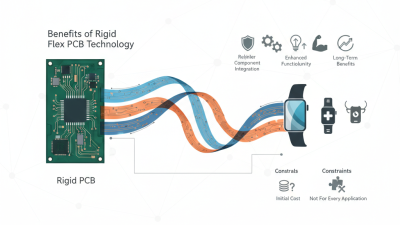
Global sourcing is no longer only a price comparison. It is a test of engineering judgment, supplier discipline, and long-term product reliability. A rigid flex board can combine rigid sections with flexible circuits, reducing connectors, assembly steps, and potential failure points. In a compact medical device, for example, the board may bend around a battery while supporting a stable connector area.
Joe Fjelstad, a respected flexible-circuit engineer and author, has expressed this direction clearly: “The future of electronics is flexible.” His view remains relevant as products become thinner, lighter, and more portable. Yet flexibility alone does not guarantee success. That assumption can fail.
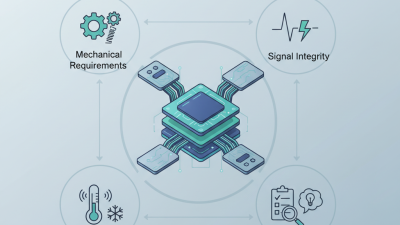
A global sourcing decision should examine controlled impedance, bend radius, copper thickness, layer registration, and thermal performance. It should also verify material traceability, inspection methods, and production capacity. A capable supplier can explain how prototypes become repeatable production. That conversation matters.
The strongest sourcing programs request cross-section reports, first-article inspection data, and realistic delivery estimates. They compare total cost, not only the quoted unit price. Freight, tooling, redesigns, and yield losses can change the result quickly. Small details matter.
Experienced buyers also review quality systems and communication practices before placing large orders. Certifications help, but they never replace technical evidence. A supplier may look impressive online and still struggle with tight bend requirements. Careful validation is necessary.
Choosing a rigid flex board is therefore a balanced decision. It can improve packaging, durability, and assembly efficiency. It can also introduce design complexity. Good sourcing recognizes both sides. That is where expertise becomes valuable.

Rigid-Flex Architecture: IPC-2223 Bend-Zone Design Requirements
Why Choose Rigid Flex Board for Global Sourcing?
Rigid-flex boards combine stable rigid sections with controlled bending zones. IPC-2223 provides practical guidance for designing these transitions. The bend zone must remain free from components, vias, and sharp copper features. These details reduce stress during assembly and field use. A generous bend radius matters. Tight folds can crack copper, coverlay, or adhesive layers. The correct radius depends on layer count, material construction, and flex type. Static bends and repeated dynamic bends require different design decisions.
During design reviews, I check the neutral axis before approving a mechanical drawing. Copper near this axis experiences less strain. Layer symmetry can help, but real stackups are rarely perfect. That is one area worth questioning. Many teams also overlook stiffener length and clearance near the rigid-flex transition. IPC-2223 should guide the design, but the fabricator must confirm achievable tolerances. Global sourcing becomes safer when drawings define bend radius, bend direction, bend cycles, and inspection points clearly.
Tips:
Keep the bend zone clean and visibly marked. Avoid abrupt width changes. Use curved traces instead of sharp corners. Confirm the minimum radius with the selected construction. Request a cross-section review before production. A small prototype can reveal unexpected stress. It may also expose a weak assumption.
Reliability Benchmark: IPC-6013 Class 3 Performance for Critical Assemblies
Rigid-flex boards suit critical assemblies because they combine rigid support with controlled flexing zones. The real question is reliability under stress.
IPC-6013E Class 3 sets demanding requirements for high-reliability printed boards. It addresses construction, inspection, qualification, and performance testing. The standard does not promise a universal field-failure rate. That matters. A certificate is not a guarantee.
In production reviews, engineers should examine plated-through holes, microvias, copper thickness, and the rigid-to-flex transition. Thermal cycling can expose barrel cracks. Repeated bending can damage unsupported copper. IPC-TM-650 test methods provide practical evaluation procedures for these risks. The IPC 2024 Electronics Industry Survey also identifies quality consistency, supply-chain disruption, and manufacturing cost pressure as continuing industry concerns. Global sourcing therefore needs measurable controls, not only a lower quotation.
A useful benchmark includes documented Class 3 compliance, lot traceability, controlled impedance records, and cross-section analysis. Suppliers should also define the minimum bend radius and bending cycles for the actual assembly. Small details matter. A connector may pass inspection while the nearby flex zone fails after installation. That weakness is easy to miss.
Design reviews should compare thermal profiles, material systems, and field handling conditions. Qualification samples should represent production materials, tooling, and operators. IPC-6013E supports disciplined acceptance, but engineering judgment remains necessary. Real assemblies are rarely perfect.
Why Choose Rigid-Flex Board for Global Sourcing?
Reliability Benchmark: IPC-6013 Class 3 Performance for Critical Assemblies
IPC-6013 classifies rigid-flex printed boards by application performance requirements.
Class 3 is intended for high-reliability products where continued performance is essential,
making it a strong benchmark for critical assemblies and global sourcing programs.
The chart uses the official ordinal IPC class designations: Class 1, Class 2, and Class 3.
The values are class identifiers, not failure-rate percentages or supplier scores.
Source: IPC-6013 performance-class framework.
Global Compliance: UL 94 V-0, RoHS, REACH, and IPC Traceability
Why Choose Rigid Flex Board for Global Sourcing?
Rigid-flex boards support compact products with fewer connectors and less assembly work. For global sourcing, compliance evidence matters as much as electrical performance. UL 94 V-0 materials can reduce flame spread under specified test conditions. This rating does not replace product-level safety evaluation. RoHS documentation should confirm restricted-substance control for the delivered material. REACH records should identify relevant substances and supplier declarations. Requirements can differ across markets.
Traceability connects each board to its manufacturing history. IPC-based records may include material batches, process dates, inspection results, and revision-controlled drawings. Lot codes help engineers investigate a field issue without guessing. Records matter. Experienced sourcing teams should review certificates, not simply collect them. A report can become outdated when materials or factories change. That point is easy to miss.
A practical audit may sample coverlay, adhesive, copper, and stiffener documentation. It should also compare the approved stack-up with the shipped board. Visual checks alone cannot prove compliance. Electrical testing, dimensional inspection, and controlled change notices add stronger evidence. Our experience shows that small documentation gaps can delay an otherwise capable project. Sometimes, the board passes every test but lacks a clear chain of custody. That weakness deserves attention before volume purchasing begins.
Sourcing Economics: Yield, Assembly Cost, Lead Time, and Lifecycle Value
Why Choose Rigid Flex Board for Global Sourcing?
Rigid-flex boards often cost more per panel, but panel price is only one line in the sourcing model. Fewer connectors, cables, and manual mating steps can reduce assembly labor and inspection points. In one comparative costing exercise, removing two connectors eliminated six placement and testing operations. The saving was real, but smaller than expected after tooling and bend-control costs were included. That is worth checking early.
Yield deserves equal attention. Rigid-flex designs combine stiffeners, flexible layers, plated holes, and controlled bending zones. A small stack-up error can create scrap or rework. IPC design guidance emphasizes bend-radius control and material compatibility, yet it does not provide a universal yield percentage. Suppliers should therefore share lot-level first-pass yield, not only quoted capacity. Ask for data from similar layer counts and finished dimensions. Numbers matter.
Lead time can improve when cable preparation, connector purchasing, and final integration become one controlled process. McKinsey’s 2023 global supply-chain survey reported that 73% of companies had changed their supply-chain footprints since 2020. That shift makes regional capability and second-source qualification more valuable. Lifecycle value also includes field reliability, service labor, and inventory exposure. The calculation remains imperfect. Early prototypes may hide late-stage bending failures, so sourcing decisions should include pilot builds, failure analysis, and realistic replacement assumptions.