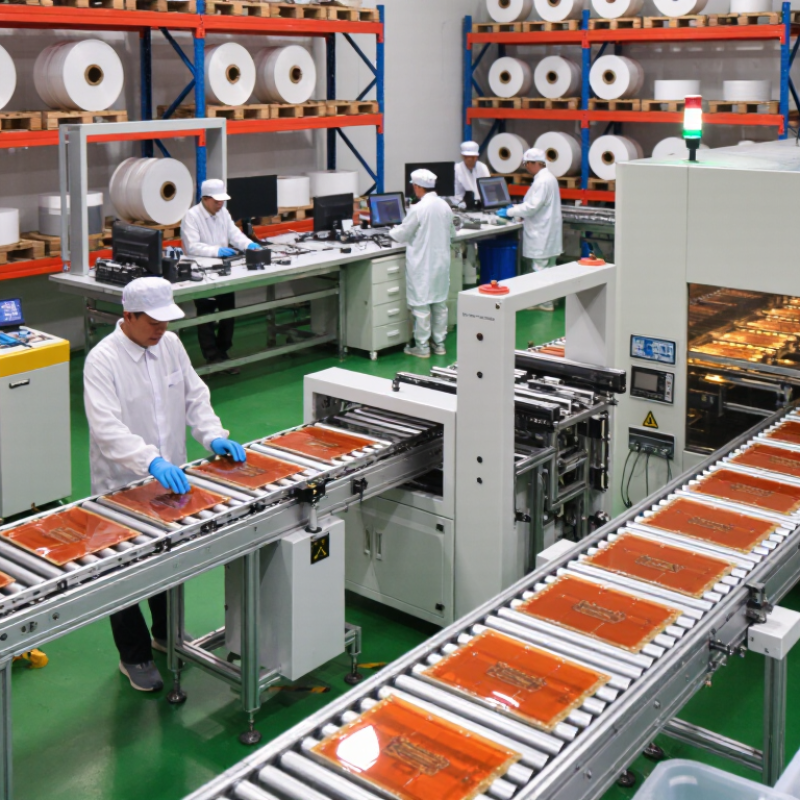
Choosing among China’s flex PCB manufacturers requires more than comparing quotations. A thin polyimide circuit may look simple on a drawing, yet its copper, adhesive, bend radius, and coverlay determine whether it survives repeated movement. Small details matter.
Prismark’s 2024 industry review reported that global PCB production value fell to about $69.5 billion in 2023, after a sharp electronics downturn. Its market analysis also pointed to recovery, underscoring how demand can shift quickly. The figures cover the broader PCB industry, not flex pcbs alone, so they are context—not a ranking of suppliers. As longtime PCB analyst Dr. Hayao Nakahara has described the sector, “The PCB industry is a barometer of the electronics industry.”
For buyers, the useful question is whether a factory can prove its process controls. Ask for stack-up drawings, controlled-impedance results where relevant, bend-cycle test conditions, yield data, and traceability records. Request samples that match the intended material and copper weight; a polished demo board proves little by itself. No supplier is perfect. Even a capable factory may struggle with a rushed design or unclear specifications.
This guide compares Chinese manufacturers through engineering capability, product range, quality systems, communication, and delivery evidence. It treats certifications as supporting evidence, not guarantees. A careful shortlist can reduce surprises, but supplier claims still need verification. That part is less glamorous. It matters most.
A flex PCB manufacturer designs and fabricates circuits on thin, bendable insulating films, often polyimide. Unlike rigid boards, these circuits can bend around hinges, fit narrow enclosures, or connect moving parts. The manufacturer converts engineering files into copper traces, laminated layers, protective coverlay, and finished panels. A panel may contain one circuit or many copies. Small details matter. Trace width, copper thickness, layer alignment, and bend radius all affect electrical performance and durability.
Production may include material selection, imaging, etching, lamination, drilling, plating, and final cutting. Some manufacturers also review layouts and suggest changes before fabrication. For example, a sharply folded cable near a connector may need a wider bend area or added reinforcement. Electrical continuity tests and visual inspections help catch faults; more demanding designs may require impedance checks or dimensional measurement. A drawing can look tidy yet leave a critical bend unclear. That is worth discussing early, since manufacturing cannot reliably guess the intended shape. Flex PCB makers produce single-layer, double-layer, and multilayer circuits, sometimes with stiffeners where components need a stable mounting surface.
China’s scale makes supplier selection harder, not easier. IPC’s 2023 World PCB Production Report estimates global PCB production value at $73.6 billion, with China accounting for roughly 54%. That scale does not prove a factory can produce reliable flexible circuits. A polished capability deck is not proof.
Evaluate process control and engineering evidence. Ask for cross-sections, first-article results, defect records, and traceability from laminate lot to finished panel. Check whether the supplier follows the relevant IPC-6013 requirements for flexible printed boards. For a moving cable, review dynamic-bend test conditions, copper type, stack-up, and specified bend radius. A static-fold sample cannot predict repeated motion. Small details matter.
Compare pilot runs with later production, not just quoted prices. Request yield data and clear explanations of failed tests, corrective actions, and inspection limits. Confirm that impedance, hole quality, and coverlay alignment are measured against your drawing. Ask engineers to review the actual bend path and connector area before tooling begins. If the answers stay vague, pause. I would also question unusually high yield claims without dated records; supplier metrics can be incomplete or defined differently.
Chinese manufacturers offer a range of flexible circuit production, from single-sided and double-sided FPCs to multilayer designs. Common options include coverlay, stiffeners, fine-pitch features, and component assembly. Ask whether a factory can support design review, prototypes, and repeat production. That matters. A drawing may look complete while bend radius, copper thickness, or connector placement remains unclear. Request a proposed stack-up and sample panel, then review test records alongside the capability sheet.
For circuits that bend during use, explain whether the motion is static or repeated and describe the expected bend area. Ask how the manufacturer checks trace spacing, impedance, and electrical continuity. A practical supplier should discuss limits and flag design risks before tooling begins. Even then, the first prototype may disappoint; treat that result as useful evidence, not a verdict. Compare written tolerances, inspection methods, and engineering responses across suppliers. A quick quotation helps, but it does not prove the process fits your design.
China’s flex PCB suppliers differ most in process control, not catalogue claims. Compare minimum line width and spacing, layer count, copper thickness, and achievable bend radius against your actual stack-up. Ask for cross-sections, impedance data, and test records from a similar build. A sample that bends once is not proof of repeatable flex life.
Grand View Research estimated the global flexible printed circuit board market at about US$18.6 billion in 2023, with projected growth of 10.7% annually from 2024 to 2030. That growth raises the value of dependable scaling. Check whether a factory can move from prototypes to production without changing materials, tooling assumptions, or inspection methods. IPC-6013 provides qualification and performance requirements for flexible printed boards; ask how a supplier applies the relevant revision and records conformance. Certificates such as ISO 9001 or IATF 16949 help assess quality systems, but they do not replace product-level evidence. Paperwork matters.
Services also separate capable partners from simple assemblers. Compare design-for-manufacturing reviews, stack-up advice, panelization, electrical testing, and failure analysis. Ask who owns each step. I still find supplier comparisons imperfect: public capability sheets rarely reveal yield or corrective-action speed. Request a recent, redacted example. Then check lead-time assumptions, material traceability, and how engineering changes are approved. Not enough.
Choosing a flex PCB manufacturer in China starts with the board’s job, not a price list. A camera hinge that bends thousands of times needs different engineering than a one-time service loop. Share the bend radius, motion cycle, operating temperature, and available space before requesting a quote. Small details matter. Ask whether the supplier can review the stack-up, copper type, coverlay openings, and stiffener placement. A design-for-manufacturing review may reveal cracking risks near pads or sharp corners. Some buyers skip this step; it can save time, though review quality varies.
For early prototypes, prioritize engineering access, clear feedback, and useful test reports over the lowest unit price. Request sample panels and inspect trace alignment, adhesive squeeze-out, and connector reinforcement under magnification. Then confirm electrical testing, impedance control if required, and documented inspection criteria. Ask how materials are traced and process changes are communicated. For larger orders, check lot-to-lot consistency, realistic lead times, and capacity during busy periods. A polished sample proves little on its own. Compare candidates using the same drawing package and acceptance limits. It may feel slower. Yet quotes become more meaningful when tooling, testing, and yield assumptions are visible.
| Project Requirement | Manufacturer Capabilities to Look For | Relevant Materials or Processes | Evidence to Request | Questions for Supplier Evaluation | Best Fit When... |
|---|---|---|---|---|---|
| Repeated dynamic bending | Experience designing and producing flex circuits for repeated motion; controlled stack-up and copper placement; design-for-manufacturing feedback. | Flexible dielectric such as polyimide; copper type and thickness selected for the bend conditions; coverlay and adhesive choices suited to the design. | Stack-up proposal, bend-area design review, representative test data, and documented inspection criteria. | How will the proposed construction address bend radius, bend direction, copper layers, and expected cycle life? | The circuit moves repeatedly during normal product operation, such as in a hinge, actuator, or moving assembly. |
| Static or occasional flexing | Ability to build the specified layer count and outline accurately, with appropriate coverlay registration and controlled transitions between flexible and supported areas. | Polyimide flex constructions are common; local stiffeners may be used where components or connectors need support. | Stack-up details, fabrication notes, sample inspection results, and confirmation of stiffener material and placement. | Can you identify areas that should remain bendable and areas that need support, and confirm them in the fabrication drawing? | The circuit is folded during assembly or service but is not designed for continuous motion. |
| Rigid-flex assembly | Coordinated rigid and flexible layer construction, controlled transitions, and experience supporting the assembly requirements of both sections. | Combined rigid and flexible dielectric layers; coverlay in flex regions and solder mask in appropriate rigid regions, as defined by the design. | Proposed layer build, transition-zone review, cross-section or qualification records, and assembly-related design feedback. | How are the rigid-to-flex transitions, bend zones, and layer registration inspected and controlled? | The product benefits from fewer connectors or a single integrated circuit linking rigid board sections. |
| Fine-pitch components or dense routing | Verified capability for the required line/space, via structures, layer count, registration, and component-pad geometry—not just a general capability statement. | Multilayer flex or rigid-flex construction; via and copper features must be compatible with the selected materials and manufacturing process. | Capability matrix with process limits, design-rule review, test coupons where applicable, and sample or qualification results for comparable features. | Which limits apply to this exact stack-up, and are they guaranteed for production rather than offered only as a development capability? | Space constraints, fine-pitch parts, or routing density make manufacturability a key design risk. |
| Connector or component support | Accurate stiffener placement, connector-pad processing, and assembly support; ability to review mechanical loading at connection points. | Polyimide, FR-4, or metal stiffeners may be specified according to mechanical, thermal, and assembly needs; the correct choice depends on the design. | Stiffener drawings, material specifications, placement tolerances, and assembly feedback for the intended connector or component. | Can you confirm stiffener thickness, adhesive or bonding method, and the finished thickness required at the connector? | Flexible sections need localized support for connectors, components, or handling during assembly. |
| Electrical reliability and production testing | Documented electrical test coverage, inspection procedures, lot traceability, and a clear process for handling nonconforming product. | Test method and acceptance criteria should match the drawing, purchase specification, and product risk; continuity and isolation testing are common checks. | Example test report, inspection plan, traceability details, and quality-system certificates whose scope and validity can be verified. | What electrical tests are performed on each production lot, and how are results linked to the shipped lot? | Field failure risk, safety requirements, or high-volume production calls for measurable and traceable quality controls. |
| Regulated or application-specific requirements | Ability to work to the buyer’s stated revision, class, material restrictions, and documentation requirements; certificates should be checked for scope. | IPC-6013 covers qualification and performance requirements for flexible printed boards; IPC-2223 provides design guidance for flexible printed boards. | Written compliance matrix, applicable revision and class, material declarations where required, and qualification documentation. | Which standard, revision, and acceptance class are included in the quotation and production records? | The end product has formal quality, documentation, or customer-specific compliance requirements. |
| Prototype-to-production transfer | Consistent engineering review, controlled revision management, repeatable process documentation, and capacity planning for the expected order pattern. | Production stack-up and process controls should be agreed before release; changes to materials or construction should be reviewed and approved. | Prototype inspection data, revision-controlled build documentation, change-control procedure, and a production plan based on the buyer’s forecast. | How are engineering changes communicated, approved, and kept consistent between prototype and production lots? | The project will move from samples to recurring orders or will require design revisions during development. |
| Cost-sensitive or high-volume production | Transparent quotation assumptions, stable material sourcing, yield-improvement process, and capacity appropriate to the forecast. | Cost depends on layer count, material, panel utilization, feature complexity, testing, finishing, and order volume; compare like-for-like specifications. | Itemized quotation, stated tooling and test charges, lead-time assumptions, material alternatives, and quoted order quantity breaks. | What assumptions drive the quoted price, and which design changes could reduce cost without weakening required performance? | Unit cost and repeatability matter, and the design can be reviewed before production release. |

Selection note: No single manufacturer is best for every flex PCB project. Compare suppliers against the same drawing, stack-up, bend conditions, testing requirements, order quantities, and delivery assumptions. Confirm all critical capability limits and compliance claims in writing before placing an order.