China remains the world’s most important manufacturing base for printed circuit boards, but supplier selection requires more than checking production capacity. IPC’s World PCB Production Report identifies China as the leading global PCB production center by a wide margin. Prismark’s PCB Industry Forecast also highlights continued demand for advanced substrates, high-density interconnects, flexible circuits, and automotive electronics. These trends explain why international buyers continue searching for reliable electronic pcb board suppliers in China.
A strong supplier should demonstrate stable engineering control, documented quality systems, and transparent production records. Look for ISO 9001 certification, UL recognition, IPC-6012 capability, and IATF 16949 experience when automotive applications are involved. Factory details matter. A clean drilling area, controlled humidity, automated optical inspection, and traceable material labels can reveal more than a polished website. Certifications alone are not enough.
This guide examines leading Chinese suppliers through practical criteria, including technology range, minimum order quantities, prototype speed, testing, communication, and export experience. Grand View Research’s Printed Circuit Board Market Size, Share and Trends Analysis Report, 2024–2030, projects steady market expansion, driven by electric vehicles, data centers, and connected devices. Demand is rising, yet supplier quality can vary sharply. A large factory is not automatically the right factory. The comparison is imperfect, especially because capacity figures are often self-reported. Buyers should verify claims through samples, audit records, and pilot orders before committing to volume production. That caution may seem slow. It often prevents expensive redesigns, delayed shipments, and field failures.
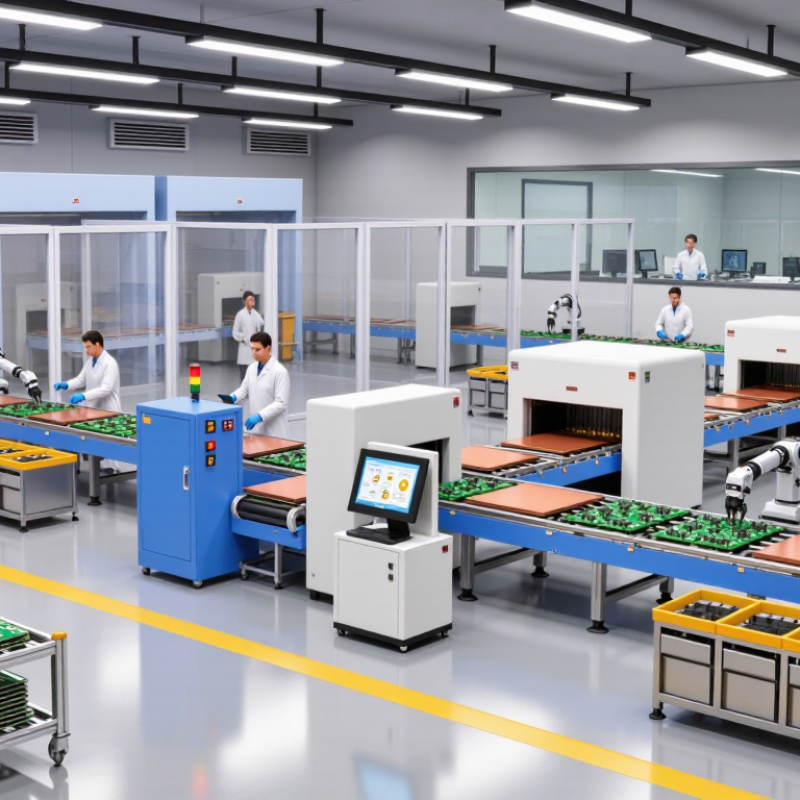
An electronic PCB board supplier is a company that supports the design, production, and delivery of printed circuit boards. Its work may begin with reviewing circuit files and checking whether traces, holes, and component spaces are practical. It can continue through material selection, fabrication, assembly, inspection, and packaging. A capable supplier should explain technical limits clearly. It should not promise impossible prices or delivery dates. During production, engineers may use automated optical inspection, electrical testing, and microscopic checks for solder quality. These steps help detect open circuits, weak joints, and incorrect component placement.
China has many PCB suppliers with different strengths. Some focus on prototypes, while others handle large-volume electronics manufacturing. The better choice depends on layer count, board material, tolerances, surface finish, and required testing. Ask for process records, quality certificates, sample boards, and realistic production schedules.
Standards such as IPC guidance and ISO-based quality systems can support a more reliable evaluation. However, certificates alone do not prove consistent workmanship. I have seen specifications look excellent while communication remained vague. That weakness matters when a design changes late. A dependable supplier assigns a technical contact, protects design information, reports defects honestly, and explains corrective actions. Inspect the first article carefully. Small details, such as uneven plating or a poorly marked revision, can become expensive problems later. No supplier is perfect. The review process should remain active.
China became a major PCB manufacturing hub through dense industrial networks, skilled labor, and mature component supply chains. A board can move from design review to fabrication, assembly, inspection, and shipping within one coordinated region. This shortens lead times and reduces unnecessary transport.
Top suppliers usually support several technologies, including multilayer, high-density interconnect, flexible, and rigid-flex boards. Their factories often use automated drilling, laser imaging, solder mask coating, and optical inspection. Production records should show copper thickness, layer alignment, impedance results, and electrical testing. Ask for clear documentation.
Cost is another strong advantage. Large production volumes spread equipment and engineering costs across many orders. However, the lowest quotation can hide weak inspection or unstable materials. That mistake becomes expensive after assembly. Reliable buyers check samples, certifications, process controls, and change-management procedures before approving mass production. Independent testing can also verify claimed performance.
China’s export infrastructure adds practical value. Ports, freight networks, and experienced customs teams support regular international delivery. Local engineers can often communicate quickly about Gerber files, drill charts, and tolerance changes. Still, communication is not always perfect. A translated specification may miss one critical detail. Written approval matters.
A careful supplier assessment should include factory audits, traceability, environmental controls, and realistic capacity checks. Good evidence is more useful than impressive promises. That remains true anywhere.
Chinese PCB suppliers offer far more than standard two-layer boards. Their portfolios commonly include single-sided, double-sided, multilayer, HDI, flexible, rigid-flex, metal-core, and high-frequency boards. Multilayer boards support dense routing in servers, industrial controls, and automotive electronics. HDI boards use microvias and fine lines for compact devices. Flexible circuits bend around hinges, cameras, and wearable modules. Rigid-flex designs combine mechanical stability with repeated movement. Ceramic and metal-core boards manage heat more effectively, especially in power electronics and LED systems.
Industry data shows why this range matters. Prismark’s 2024 market review places global PCB sales near the 2023 level of about 70 billion US dollars, despite uneven demand. IPC’s market studies also identify advanced packaging, automotive electronics, and high-density interconnects as major growth areas. These reports do not prove that every Chinese supplier has equal capability. Certification, layer registration, impedance control, and thermal testing vary widely. That detail is easy to overlook.
Tips: Match the board type to the real operating environment. Ask for stack-up drawings, controlled-impedance reports, and thermal test results. For HDI, inspect via filling and drill alignment. For flexible boards, check bend-cycle data and copper thickness. A prototype may pass inspection but fail after repeated bending. I have seen specifications look excellent on paper, yet the first production batch exposed solder-mask and warpage issues. Leave room for testing. Suppliers should also provide traceability records, material certificates, and measurable acceptance criteria.
Chinese PCB manufacturers commonly provide single-sided, double-sided, multilayer, HDI, and rigid-flex boards. The chart shows representative copper-layer configurations; actual designs may use different layer counts based on electrical and mechanical requirements.
Higher layer counts generally support greater routing density and more complex electronic designs.
China’s PCB sector is broad, but supplier quality varies sharply. A 2024 Research and Markets report valued the global PCB market at about USD 76 billion in 2023. It projects continued growth through 2028, driven by vehicles, communications, and industrial electronics.
That growth can hide weak process control. Buyers should request recent audit records, not polished presentations.
Ask whether the factory controls drilling, plating, solder-mask application, and electrical testing internally. Review capability against IPC-6012 requirements, including layer registration, copper thickness, and insulation performance. Request sample cross-sections. Tiny voids around plated holes can become field failures. They are easy to miss.
Request first-pass yield, defect-per-million data, corrective-action reports, and lot traceability. The 2024 IPC Electronics Industry Survey showed persistent pressure from material costs, labor shortages, and supply-chain uncertainty. A reliable supplier should explain how it manages these risks.
Confirm testing equipment calibration and certificates through independent verification. Also inspect packaging, moisture control, and delivery records.
Cheap boards are expensive when rework begins. I would still avoid trusting one successful prototype; production consistency needs repeated lots and documented reviews.
China’s PCB suppliers serve many industries, especially automotive, consumer electronics, telecommunications, and industrial automation. Prismark’s 2023 PCB industry data estimated that China produced about 57% of global PCB value. This scale supports flexible volumes, multilayer boards, and quick engineering changes.
Electric vehicles use PCBs in battery management systems, charging units, dashboards, and motor controls. Automotive boards must survive vibration, heat, moisture, and repeated thermal cycling. Consumer devices need compact HDI boards for phones, cameras, wearables, and smart appliances. Telecommunications equipment depends on high-speed boards with controlled impedance. Grand View Research estimated the global PCB market at about USD 89.7 billion in 2023, showing the broad demand behind these applications.
Industrial customers often request heavy-copper boards for inverters, factory controllers, and power supplies. Medical equipment uses boards in monitors, imaging systems, and portable diagnostic devices. These applications require traceability, stable materials, and documented testing. In supplier audits, engineers should check solderability records, cross-section reports, impedance results, and change-control procedures. A low quotation can hide weak inspection practices. That remains a common risk.
Aerospace and defense-related electronics also require strict reliability controls, although qualification cycles are longer. IPC technology roadmaps highlight rising demand for higher density, faster signaling, and improved thermal management. The data is encouraging, but not perfect. Supplier capability can vary sharply between factories, even within the same region.
| Supplier Category | Main PCB Types | Typical Layer Range | Key Manufacturing Capabilities | Industries Commonly Served | Typical Quality and Compliance Requirements |
|---|---|---|---|---|---|
| High-Volume Multilayer PCB Suppliers | Rigid multilayer HDI Rigid-flex | 4 to 30+ layers, depending on design complexity and production equipment | Automated inner-layer registration, laser drilling for microvias, impedance control, automated optical inspection, and electrical testing | Consumer electronics, networking equipment, computers, industrial controls, and automotive electronics | Documented process control, traceability, controlled impedance, solderability testing, and production verification based on applicable IPC requirements |
| Quick-Turn Prototype PCB Suppliers | 2-layer rigid Multilayer prototypes Small-batch boards | Usually 2 to 12 layers for rapid development projects | Fast engineering review, design-for-manufacturing checks, short-run fabrication, rapid tooling, and prototype assembly support | Startups, research laboratories, product development teams, medical prototypes, and industrial equipment development | Accurate design file review, material confirmation, dimensional inspection, electrical testing, and controlled revision management |
| Automotive PCB Suppliers | High-temperature rigid HDI Metal-core Rigid-flex | 2 to 16 layers, with higher counts used in advanced control systems | Thermal-cycle validation, vibration-resistant construction, fine-line processing, heavy copper options, and long-term process traceability | Vehicle control units, battery systems, charging equipment, lighting systems, driver assistance, and in-vehicle connectivity | Automotive quality-management systems, reliability testing, lot traceability, thermal cycling, vibration testing, and strict change control |
| Industrial and Power Electronics PCB Suppliers | Heavy-copper PCB Metal-core PCB High-voltage PCB | 2 to 12 layers, with copper thickness selected according to current and thermal requirements | Thick copper plating, enhanced heat dissipation, large through-holes, high-voltage spacing, and thermal management design support | Motor drives, solar inverters, power supplies, factory automation, energy storage, and control cabinets | Electrical safety review, thermal performance testing, creepage and clearance control, dielectric testing, and production consistency |
| Flexible and Rigid-Flex PCB Suppliers | Single-sided flex Double-sided flex Rigid-flex | 1 to 12 conductive layers, depending on bend requirements and interconnection density | Flexible material lamination, controlled bend-radius processing, coverlay application, dynamic-bend validation, and precision punching or laser cutting | Wearable devices, cameras, medical instruments, aerospace equipment, automotive modules, and compact consumer products | Flex-life testing, bend-radius verification, dimensional control, conductor adhesion testing, and material traceability |
| RF and High-Frequency PCB Suppliers | RF PCB Microwave PCB Low-loss multilayer | 2 to 16 layers, based on frequency, signal integrity, and antenna structure | Low-loss dielectric processing, controlled dielectric thickness, precision routing, impedance testing, and surface-finish control | Wireless communication, radar equipment, satellite systems, test instruments, antennas, and network infrastructure | Material dielectric-property verification, controlled impedance measurement, signal-integrity review, and strict dimensional tolerances |
| LED and Thermal Management PCB Suppliers | Aluminum-core Copper-core Thermal multilayer | Usually 1 to 6 layers for lighting and heat-generating applications | Thermal substrate lamination, high-thermal-conductivity dielectric processing, insulated metal substrates, and heat-spreading design support | LED lighting, automotive lamps, displays, power modules, industrial lighting, and electronic cooling systems | Thermal resistance measurement, dielectric withstand testing, solder-joint reliability testing, and dimensional inspection |
| Medical Electronics PCB Suppliers | High-reliability rigid HDI Rigid-flex | 2 to 20 layers, selected according to device size, signal density, and reliability needs | Fine-line fabrication, clean production controls, traceability, controlled materials, precision assembly, and inspection documentation | Patient monitoring, diagnostic instruments, imaging equipment, laboratory equipment, and portable medical devices | Risk-based quality management, full material and process records, electrical testing, cleanliness control, and documented nonconformance procedures |
| Aerospace and Defense PCB Suppliers | High-reliability multilayer Rigid-flex High-frequency PCB | 4 to 30+ layers, depending on mission, packaging, and signal requirements | Advanced multilayer registration, low-outgassing material options, high-reliability via structures, environmental testing, and extensive documentation | Avionics, navigation systems, communications, unmanned systems, radar, and space-related electronics | Strict configuration control, environmental stress testing, material traceability, counterfeit-part controls, and sector-specific quality systems |
| PCB Assembly and Turnkey Manufacturing Suppliers | Bare PCB SMT assembly Through-hole assembly | Assembly capability generally covers single-layer through multilayer boards | Component sourcing, surface-mount assembly, through-hole soldering, automated optical inspection, X-ray inspection, functional testing, and box-build integration | Consumer products, industrial equipment, telecommunications, automotive electronics, medical devices, and commercial controls | Approved supplier controls, component traceability, solder-paste monitoring, inspection records, functional testing, and shipment quality reports |